




Gravel riding sits in an interesting place. It’s part exploration, part endurance challenge, and increasingly, part performance discipline. Riders are pushing further, racing harder, and training with more intent. When it comes to data, many are still relying on feel rather than something measurable.
That’s where power comes in.
For years, power meters have been a staple on the road, offering a clear, objective way to track effort, pace rides and monitor progression. On gravel, adoption has been slower, not because the benefits aren’t there, but because the demands of the terrain are different. Conditions are harsher, surfaces are inconsistent, and equipment needs to be more robust.
The Favero Assioma PRO MX is designed with exactly that in mind, bringing accurate, reliable power measurement to gravel riding in a way that feels practical rather than overcomplicated.
A growing ecosystem from Favero
What makes the PRO MX particularly well suited to gravel isn’t just that it measures power, but how it does it.
At its core is Favero’s patented spindle-based design. Rather than placing sensitive components externally, everything, including the strain gauges that measure force, along with the battery and electronics, is housed within a sealed stainless-steel spindle.
Gravel riding exposes equipment to dust, water, vibration and repeated impacts. By keeping the critical components protected inside the spindle, the system maintains consistent accuracy where other designs can be more vulnerable. The result is stable, reliable data collection, even when conditions deteriorate.
It also has a practical upside. With no electronics in the pedal body itself, that outer structure can be replaced using standard tools if it becomes worn, a useful consideration for riders logging big miles across mixed terrain.
Three ways to use power on gravel

While power data can go deep, it doesn’t need to be complicated. For gravel riders, a few simple applications can make a noticeable difference straight away.
1. Pace long efforts more effectively
Gravel rides and races often come down to managing effort over long distances. Using power helps avoid going too hard early on climbs or into headwinds.
By riding to a consistent power target, you can keep efforts sustainable, conserve energy, and finish stronger rather than fading late on.
2. Track progress beyond just speed
Speed on gravel can be misleading. Terrain, surface conditions and weather all have a huge impact, making it difficult to compare one ride to another.
Power removes that variable. Whether you’re riding into a headwind or over rough ground, your wattage gives a consistent benchmark making it much easier to track improvements in fitness over time.
3. Refine efficiency and bike setup
This is where advanced metrics come into play. Data like PCO (Platform Centre Offset) can highlight how evenly you’re applying force through the pedals, helping identify potential issues or changes needed.
On long gravel rides, small inefficiencies add up. By making subtle adjustments based on this data, riders can improve pedalling technique, reduce fatigue, and potentially avoid injuries.
On bike feel and real-world usability
On the bike, the PRO MX keeps things clean and unobtrusive. At just over 195g per pedal, with a low 11.2mm stack height and a 53mm Q-factor, it feels much like a standard gravel pedal setup.
The SPD®-compatible system is designed for smooth engagement, with a pedal body that sheds mud effectively.
Looking beyond raw wattage

Where things get more interesting is when you start to look beyond raw wattage.
Power, in its simplest form, tells you how hard you’re working. But on gravel, where cadence fluctuates and positioning changes constantly, that only tells part of the story. The Assioma PRO MX builds on this with a range of advanced metrics that give a more complete picture of how that power is being produced.
One of the most useful is PCO (Platform Centre Offset). Rather than focusing purely on output, PCO shows how force is distributed across the pedal platform. On long gravel rides - especially when fatigue sets in - small inefficiencies can creep in. Cleat positioning or changes in pedalling style can all affect how effectively power is transferred.
PCO brings those details into view. It highlights where force is being applied, helping riders refine their setup and technique in a way that’s difficult to assess otherwise. Over time, that can lead to improved efficiency and potentially reduce the risk of overuse injuries.
Alongside that, metrics like Power Phase and Rider Position add further context. Knowing when and where you’re generating torque through the pedal stroke can help smooth out effort on long climbs, while rider position tracking gives insight into how often you’re seated or standing, which can vary so often off-road due to terrain, weather or effort.
Consistency across changing terrain
All of this is underpinned by Favero’s IAV Power System, which is designed to maintain accuracy and consistency of power readings.
That’s particularly relevant for gravel riding, where surfaces and gradients rarely allow for a steady rhythm. Instead of smoothing over those variations, the system accounts for them ensuring that the data remains dependable.
Battery life that keeps up with big rides

Battery life is another area where the PRO MX quietly stands out. With up to 160 hours of use on a single charge, it’s well suited to long-distance riding, multi-day trips or simply riders who don’t want to think about charging every few rides.
When it does run low, a quick 15-minute charge can deliver up to 15 hours of riding easily topped up from a standard USB-C power source.
From common pain points to real gains
For gravel riders, the “pain points” around power meters have often been the same: concerns over durability, the hassle of installation, and whether the data is actually useful in such a variable environment.
The Assioma PRO MX addresses those by being robust enough for the terrain, simple to live with, and detailed in its data to offer genuine insight to riders.
A smarter way to ride gravel
And that’s perhaps the key point. This isn’t about turning every gravel ride into a structured interval session. It’s about giving riders the option to understand their effort more clearly, to pace long days more effectively, and to track progression over time, all without losing the essence of what makes gravel riding appealing in the first place.
As the discipline continues to evolve, that balance between adventure and performance is becoming more relevant. Tools like the Assioma PRO MX don’t change the nature of gravel riding they simply add another layer to it.
Pricing
• Assioma PRO MX-2 (dual-sided): £599
• Assioma PRO MX-1 (single-sided): £399
• Assioma PRO MX-UP (upgrade pedal): £389
For full specifications and product details, visit the Favero home page here
-
 'An incredibly gifted rider' – EF Education-EasyPost 'take a bet' and sign Tao Geoghegan Hart
American team signs British Giro d'Italia winner after three years at Lidl-Trek
-
 'I will have to check off the Vuelta at some point' – Tadej Pogačar reveals his plans for 2027
Giro d'Italia gets sidelined, as the Slovenian prioritises Worlds, the Tour de France and an elusive win in the Vuelta


-
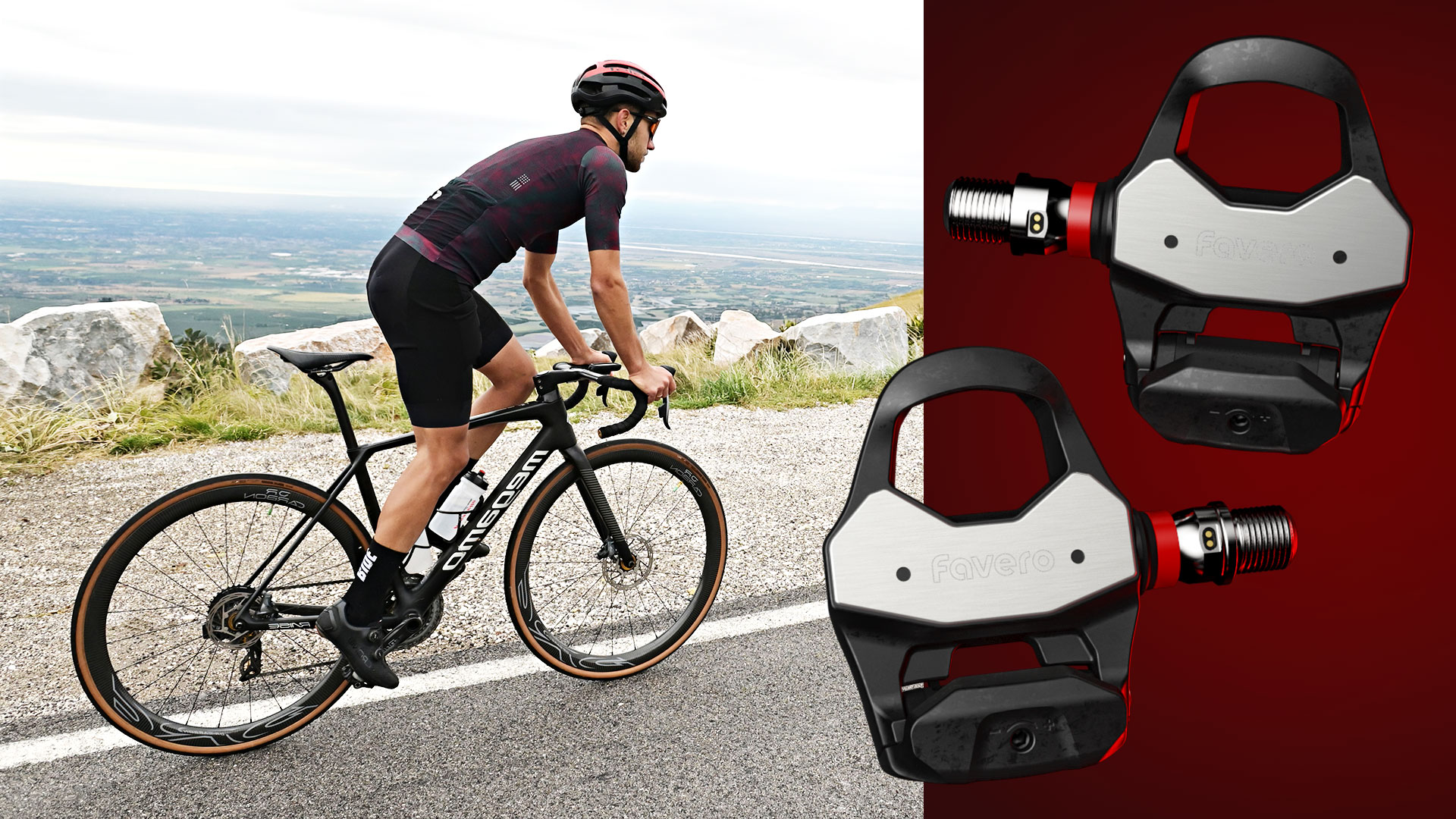 Favero Assioma PRO RL: A Deeper Look at the Lightest Adjustable LOOK®-Compatible Power Meter
A Closer Look at Favero's Assioma PRO RL Power Meter Pedals
-
 How to look after your fitness through the festive season - without killing the fun
You don't have to make sacrifices over Christmas and new year and be a slave to your training. Here's how you can stay fit and enjoy yourself through the holiday period
-
 The crown joules: Why 3,000kJ is the new magic number in cycling performance
Kilojoule ceilings have become pro cycling’s secret talent test, and 3,000 is the magic number. Cycling Weekly examines the latest science of stamina and how to use it to boost performance
-
 How to strike the perfect balance between indoor and outdoor cycling
You don't need to make a choice between riding indoors or outside –combine both for the ideal cycling mix for optimum performance
-
 More bang for your bucks – is indoor cycling really harder than riding outside?
 -
 I'm living proof that life begins at 50: Why it’s never too late to be the fittest you’ve ever been
If you've spent years 'enjoying' yourself then fear not, there's always time to flick the switch, and get fit again.
-
 I rode my bike outside for the first time in four months after a winter cycling indoors - did riding 2,000 miles in my shed prepare me for outdoor reality?
Steve has taken on indoor challenges long and short over winter, but would 15-miles on the road prove a pedal stroke too far?
10 Comments -
 Riding with Raynaud’s: How to beat cold hands and feet over winter
Symptoms of Raynaud's syndrome extend far beyond simply having chilly hands and feet, our experts guide you through the how-to on making winter riding bearable despite the disease


