'Maybe there's also an anarchist component to biking' - meet the man cycling against borders, from Amsterdam to Japan
Seb is travelling to Japan by bike along some of the world's most dangerous borders
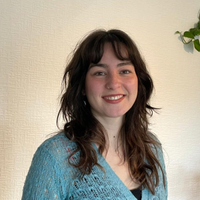

Seb was over a year into his bike ride to Japan when he crashed and broke his collarbone in Syria.
The 25-year-old had set out from the Netherlands a year before to understand the reality of borders and to meet the people attempting to move across them. His Instagram page asks a deceptively simple question: "Why can I move across the world willy nilly, when so many others can’t?"

Despite the crash, Syria had opened its arms to Seb, a country he both admired and which had formed part of the inspiration for his trip, by Syrian friends he’d met back home in Amsterdam. Migrants in his home, he was welcomed into theirs. All that separated their experiences was a passport: one strong, one weak.
Article continues below"I wanted to learn about the world, to see the world and the effects of Western imperialism abroad. Where better to go than to Iraq and to Afghanistan and other places under heavy sanctions, and then combine that with biking, to shape my own learning process and then share that publicly."
Seb has so far spent over 400 days on the bike. I ask him what his relationship is with cycling. He tells me it is simply a means to an end.
"It doesn't make my heart throb," he confesses. "I think it's more the benefits of the bike, connecting to people around you very easily and also being very self-sufficient: you're not relying on gas; if stuff breaks, you can fix it."
Seb pauses for a moment before continuing. "And maybe there's also an anarchist component to biking. If you look at history, a lot of resistance movements have used bikes. For example, when the Netherlands was occupied by the Nazis, the bike was one of the main ways to sneakily get around, because the streets were patrolled so you couldn’t drive a car without getting checked. So this is how the resistance would spread."
After the bone break, Seb returned home to Amsterdam to recover. He’s now about to set off again, this time bound for Sicily, and the world’s deadliest border: the Mediterranean. In February of this year, the UN reported that over 600 people have died trying to cross the Mediterranean to Europe. The report came a week after the far-right Italian government approved the use of naval blockades to stop boats during periods of “exceptional pressure”.
"Then I will take a ferry to Greece, which will also be very strange," Seb continued, "taking a ferry across the place that you know people are drowning in and paying thousands to cross. So that will be strange."
Since starting his journey in October 2024, his social media follower count has steadily climbed as his miles have. But they hit a real upwards trajectory when he started talking about politics. Now his page offers a gentle introduction to more radical ideas, alongside reading lists and podcast offerings designed to help us all learn more about the systems that create displacement.
"I'm 25 and I think this has been my experience of growing up on this planet. There’s almost a schizophrenic nature or quality to life, where, on the one hand, every year that I grow older, I become more acutely aware of the total annihilation of our earth and the total overwhelm that gives, and on the other hand, the beauty in everyday life, in new connections, in the animals that surround us, in a beautiful valley, in a fresh loaf of bread.
"If you open yourself up to the damages of the world, you have to find ways to not let it overwhelm you."

In Lebanon, Seb heard bombs being dropped in Beirut. "I was active in Palestine solidarity actions before in the Netherlands, but it's just something else when you hear an Israeli drone or hear a bomb dropped in Beirut," he says.

Now, rested and ready to continue his trip back towards Japan, Seb plots out his route for me.
"I want to go back into Georgia and enter Armenia for my Chinese visa, but also because a lot of Iranians now are in Armenia, and there's still an internet blackout, so I think it would be super cool to go there and just give people the mic and just hear what the f*** is going on."
From there, he will then take in Turkmenistan, where he will be shepherded by a guide through the country and into Afghanistan. Then he'll cycle into Tajikistan, onto Kyrgyzstan and into China. Along the way, he’ll find activists and organisations fighting for change in their countries.
I finish our interview as I always do: asking if there’s anything else Seb would like to say. In answer, he twists round in his seat, searching for something just beyond him.
"There’s this sticker I have,” Seb says, unable to find what he’s looking for, "it says, ‘first they came for the activists. I did nothing. I was not an activist.'"
He’s referring to the poem, ‘First They Came’ written by Pastor Martin Niemöller in the aftermath of the second World War, of the complicity that can lie in silence and inaction. The poem famously ends: "Then they came for the Jews, And I did not speak out, Because I was not a Jew. Then they came for me, And there was no one left, To speak out for me."
Time on the bike has made Seb draw a new perspective from the famous warning-poem.
"It’s a warning to all cyclists, because we are still able to travel the world by right. And by we, I assume the people who are reading this have a British passport. The thing is, most of the world already is restricted by heavy migration controls.
"These technologies are only getting more sophisticated every year. They're tested on Palestinians. And the thing is, for now, we can still travel the world, but these technologies will eventually be used also on us. So this is why it's so important to already fight for the liberation of the people who go under migration regimes and under migration technologies, not only because it's the right thing to do, but because we can already look at the world and see what the future holds for us."
Seb is raising money for MiGreat and No Name Kitchen. Follow his journey on Instagram and via his blog: "Amsterdam to Japan. 3+ years. 25,000+km for a free world."
You must confirm your public display name before commenting
Please logout and then login again, you will then be prompted to enter your display name.