




'I thought I'd give it a shot' – inside Taylor Phinney's comeback, 16 years after his last Track World Championships
In an exclusive interview, the American tells Cycling Weekly how he's closing a loop on his career, with his sights on the LA Olympics in 2028


It was early winter last year when Taylor Phinney got a strange call from a friend. The 2028 LA Olympics were approaching, the friend told him, and USA Cycling was looking for some “power horses” to join the men’s team pursuit squad. Did he want to be put in touch with the coach?
Phinney was stunned. “I thought it was a funny joke that somebody would even think that I was still capable of doing that,” the 36-year-old now laughs. Yes, he had once been a power horse – he won a time trial stage of the Giro d’Italia in 2012, took silver in the TT at the Road World Championships the same year, and later came eighth at Paris-Roubaix – but he was six years retired from road racing, and hadn’t competed on a track for over 15 years, when he won his second individual pursuit world title.
As far as Phinney was concerned, his cycling career was over. His track days were long dead and buried. But after he put down the phone to his friend, he says, “the idea was planted in my head”.
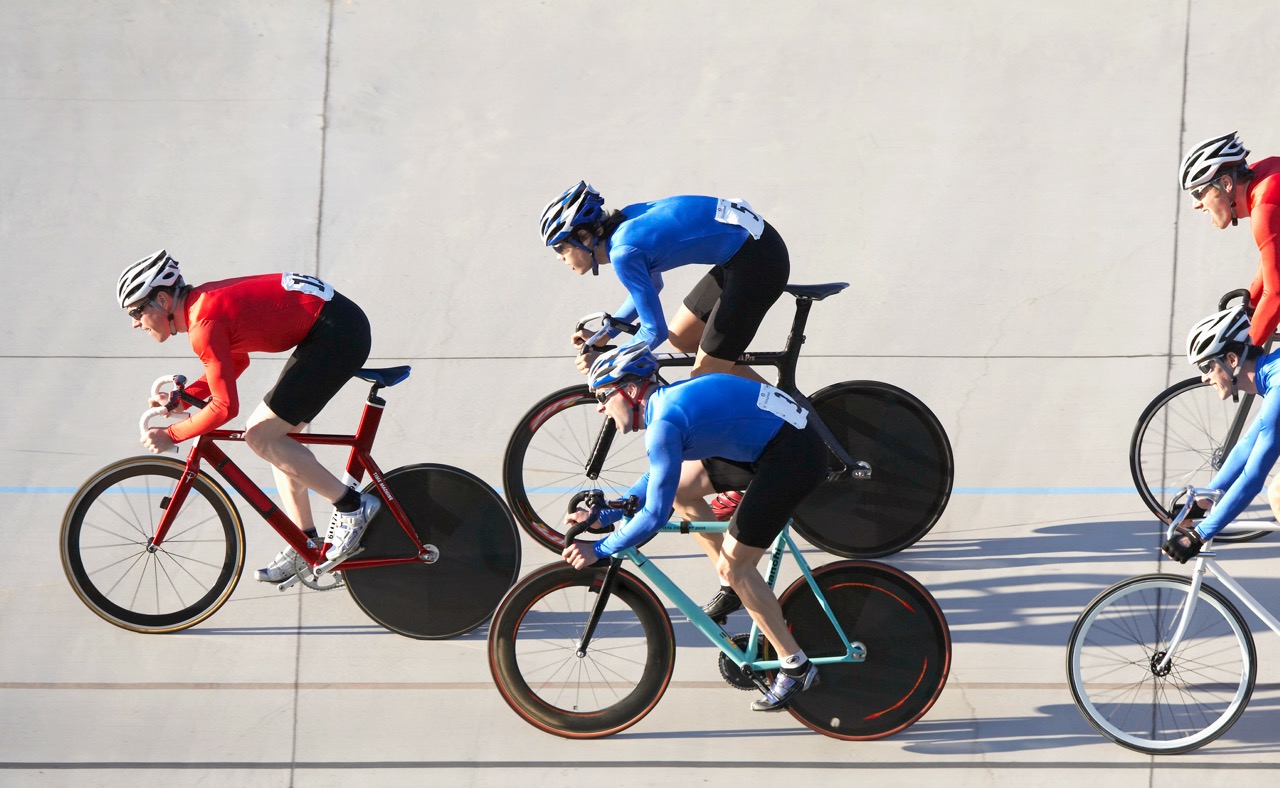
Phinney’s talking to Cycling Weekly from a hotel on Chongming Island, a leafy, out-of-town district of Shanghai, China. On Wednesday, he will lead the USA’s team pursuit quartet off the start line at the UCI Track World Championships, his first in 16 years.
The journey there has been rapid and unexpected, driven by an overarching goal: to compete at the LA Olympics in two years. It’s an event that holds huge sentimental value for the Phinney family; Taylor’s mother, Connie Carpenter-Phinney, won gold in the inaugural women's road race at the LA Olympics in 1984. His father, Davis Phinney, won bronze at the same Games in the team time trial. The opportunity to add to that legacy was too good to ignore.
Not long after the strange phone call, Phinney went to Gran Canaria on a training camp with his wife, former Tour de France Femmes avec Zwift champion Kasia Niewiadoma-Phinney. His legs felt good – he had been spending a lot of time in the gym. “I was trying to have more of an Arnold Schwarzenegger body, not necessarily a cyclist body, and I just kept thinking about this idea,” he says.
“It felt very cinematic, and it felt like it would close a loop on my career that I never actually closed on the track ever since the individual pursuit was taken out of the Olympic programme. So I thought I’d give it a shot.”

Phinney’s friend set up a video call with the USA’s men’s endurance coach, Jono Hailstone. He explained there was a team camp in April, and invited Phinney to come along. “I felt like If I was going to do it, then I was going to do it right,” Phinney says.
On 1 February, he emailed USA Cycling and USADA, the anti-doping authority, to ask to be re-added to the testing pool. It's that moment, Phinney now realises, that marked his coming out of retirement. He then worked closely with the accomplished Australian track coach Tim Decker, and built towards his tryout in the spring.
Fittingly, the camp took place in Carson, at Team USA’s home velodrome, where the Olympics will be held in two years. Phinney paid his own expenses to get there from his home in Girona, Spain. “I didn’t have a bike position, didn’t have any wind tunnel data,” he says.
“I just showed up to the camp and basically was changing my position in between every single effort to try and find something that was fast.” Did it work? Put simply, he says, “the tryout went well – since then, we’ve been to the wind tunnel, and I’m actually part of the programme now.”
Phinney officially announced his comeback on Instagram after the camp in April. “Never in a million years could I have predicted this,” he wrote. The post now has almost 400 comments – a scrapbook of encouragement from friends, fellow riders and fans.
“The response has been overwhelmingly positive,” Phinney says. “I wasn’t totally sure how it was going to be received because I kind of just ghosted from the professional road racing scene when I did [retire]. That’s what I needed to do at that time, apparently.”
Phinney’s last road result was a DNF at the Japan Cup in October 2019. He had only announced days before what seemed like a snap retirement, aged 29. By then, though, injuries had pushed him to the point he fell out of love with professional cycling. He turned instead to a new life as an artist, trading training logs for oil paints and DJ decks, and signed up for the odd gravel race to keep his hand in.
It was to his surprise then, that, come August this year, he was immersed once again in the bubble of elite cycling. Phinney joined the US team for a second camp in Zolder, Belgium, and found that training in velodromes, after only a few months back, had begun to feel “quite familiar”.
“It feels like a nice continuation of something that I closed a long time ago,” he says. “Time is funny, you know. It was a while ago, but it doesn’t feel like it was that long ago.”
Of course, the comeback has not been without sacrifices. The dates of the August camp meant Phinney had to miss this summer’s Tour de France Femmes, having previously gone every year to support his wife.
He also says he doesn’t have as much energy to be creative, “but I’m not so sad about it. I came to the realisation that I’ll have my whole life to be creative, and that’s a pursuit that I want to always be involved in. But my physical body is only capable of going this fast for a limited amount of time.”

That speed was put to the test in late August at the US National Track Championships, an event Phinney hadn’t competed at since he was a teenager. He went on to win gold in the team pursuit, though he plays down the achievement. “The National Championships is not the most competitive event,” he says. “I mean, we did like a 4:03, which is so slow. But we went 11 seconds faster than that the other day in training in a race sim[ulation].”
The goal now is to go even faster in Shanghai. This week’s World Championships mark an important first step in the qualifying process for the LA Olympics. Nineteen nations are set to compete in the men’s team pursuit. Only eight will start in LA.
“We don’t really know what to expect or how we’re to rank ourselves among our peers,” Phinney says. But he’s confident in his teammates. “Especially with the addition of Ashlin Barry,” he says, naming the 19-year-old who just won the under-23 road world title. “We’re all saying that we’re jumping on board the Smashlin Express, because he’s really carrying the team right now.”
Barry’s so strong, in fact, that Phinney is planning on ceding his own entry in Friday’s individual pursuit to the teenager. “I think he could win or get a medal,” Phinney says, and cites a fun, if sobering, fact: “The first World Championship that I won, he was two.”

Unlike Phinney, Barry was part of the US team that finished fourth at the Worlds last October – their best result since they won a bronze medal in 1995. The nation hasn’t fielded a men’s team pursuit squad at the Olympics since 2000, but if the results roll on like last year, they’ll qualify for LA comfortably.
Phinney is determined to make it there. Is that what closing the loop looks like to him? “For sure there are ideals. You set goals, and the goal is clear: racing in the Olympics,” he says. “But I think in some way, just being part of the process is enough of closing the circle. As far as I was concerned, until November or December of last year, all of the circles were closed. I was fully retired and wasn’t even thinking about racing.
“Just to be here at the Worlds and to be part of the team and feel like I’m actually an elite athlete competing at the highest level with the three or four other best team pursuiters in the country, that’s something I would not have predicted for myself eve last year in October.”
Then, as our call draws to a close, Phinney utters a sentence that he also likely never predicted he'd say: “I’m going to go do some heat training now, like the youth.” It's a simple line, but one that embodies how much his attitude to elite cycling has changed since he began training again last winter.
What does the heat training involve? A turbo session in a hazmat suit? “Nah, I’m not that crazy yet. I’ll be there eventually. I’m just going to take an uncomfortably hot bath,” he says. If it gets him even a tiny bit closer to LA, it will have been worth it.
Men’s team pursuit qualifying begins at 12:29pm local time on Wednesday (9:29pm PST Tuesday, 5:29am BST). If the USA qualify in the top eight, they’ll also compete in the first round at 7:17pm (4:17am PST, 12:17pm BST).
