



'I'll confess I sighed inwardly' – is a new wheel size really what cycling needs right now?
More 'standards' in my experience means more expense and less accessibility


When someone offers you more comfort and more speed on the bike, you don't say no. But what if it comes with a bunch of caveats, including more weight and more expense? Perhaps you'd still take it. But I'm going to confess to emitting an inward sigh when I saw that 32-inch wheels were now, officially 'a thing' (just a minor thing, admittedly) in the gravel world.
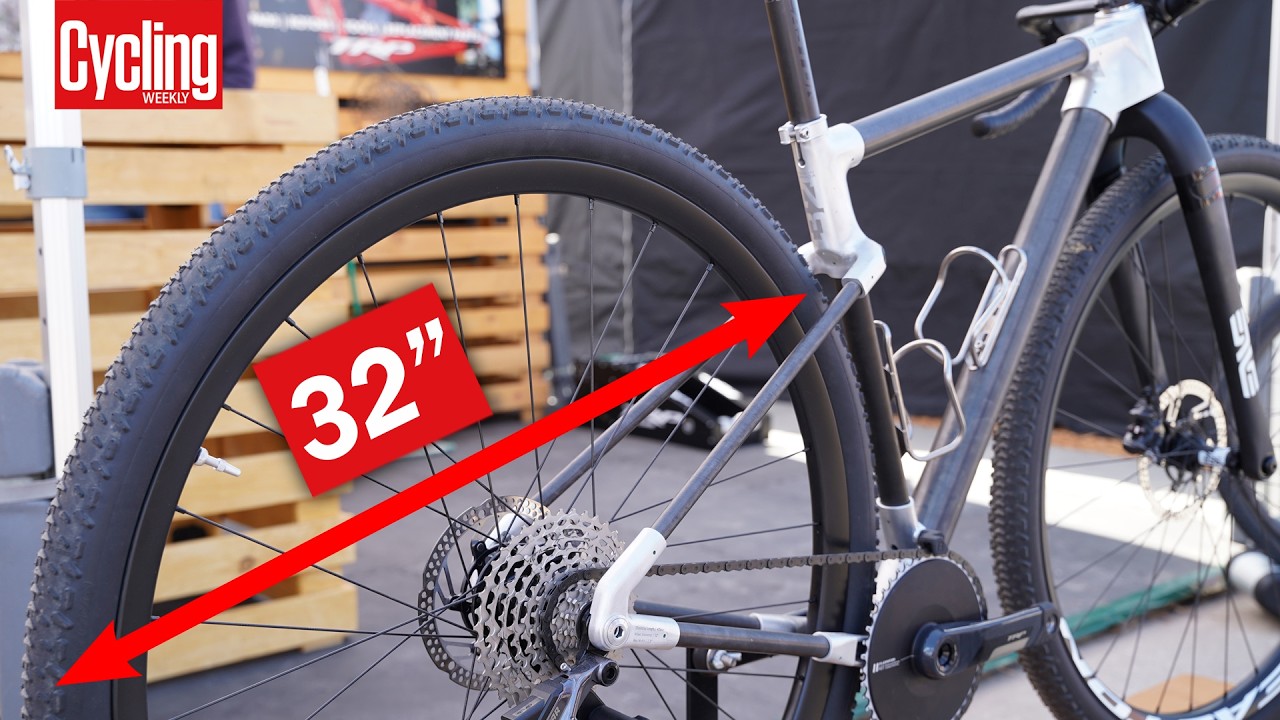
Displayed at the Sea Otter Classic in California – round one of the Life Time Grand Prix and key industry expo date – the outsized hoops purport to offer more compliance thanks to a bigger contact patch, as well as more momentum and thus more speed.
I'm not here to argue with any of that. Like many of us, I've turned a pedal on all the various mountain bike wheel sizes, and the advantages of 29in over 26in on a non-technical course are plain as day. However, I've also seen how wheel sizes, as well as all the various other 'standards' adopted in the off-road world, have created multiple niches that have only made the sport less accessible than it was previously.
The same is true to some extent in the world of road riding. Take bottom brackets. Once upon a time they were all threaded. Then came pressfit items, promising stiffness and light weight. Hurrah, we all thought. Until it started creaking, and we realised we could no longer do as much home mechanic-ing on it as before. Trouble is, if you wanted to go back to threaded, you had to buy a whole new bike. Damn.
These are the sorts of reasons that I, like many bike riders, have a natural averseness to making alterations to the basics without good reason – and I'm positively allergic to the financial outlay that goes with it. I don't need any extra gears (11 is fine thanks, and to be honest, so was 10), and I definitely don't need bigger wheels. Twelve- and 13-speeds are one thing – at least you can fit them to your current frame. But if you want to ride 32in, you'll need a new frame. On top of that, if you want the same gearing, you'll need bigger sprockets to account for the wheel size.
Watch Cycling Weekly's Video: 32" Wheels Are Definitely Coming
How much of my stuck-in-the-mud attitude is rooted in the fact I cut my cycling teeth in the Eighties – the decade which boasts the most beautiful bikes ever made – and I secretly want them all to stay like that, I don't know. I'm also not entirely averse to change and, I imagine, like most of us, I appreciate the better braking, more ergonomic geometry, light weight and excellent tyres of modern machines.
But to survive and thrive, cycling needs to be accessible, whether we're talking gravel, road, mountain biking or anything else. The more big equipment decisions a new rider has to make in order to enter the sport, the harder it becomes.
If the 32in-wheel-friendly bike frames debuted at Sea Otter are anything to go by, there is one key facet that's likely to keep this new size relatively niche: the wheels are so big, you'll need a bit of height to ride them.
