



My bike is one of my most valuable possessions, not only in monetary terms but on a sentimental level too. I spent weeks choosing it, months upgrading it to my liking, and a couple of years riding it on some epic adventures. Of course, it’s not family, like my wife and children, but it does hold an emotional, as well as financial, bond.
Unfortunately, thieves also recognise that bicycles are increasingly valuable, and care nothing for the financial and emotional damage they inflict. Home bike theft is a real concern for me. According to the 2025 Bike Index Annual Report, 45 percent of bike theft in the US occurs at home or a parking facility, while in the UK, the Office for National Statistics (ONS) reports that 62 percent of incidents take place at or around the home. The proportion of bikes left unlocked when stolen from home is typically around 40 to 50 percent, largely because people unwittingly believe their bikes are safe. The chances of getting your bike back? Ninety percent are never recovered.
“Bike prices have risen so much in the past decade,” says Jon Maisey, Marketing Manager of Kryptonite, “that it’s no longer a case of having any old lock; it’s about creating a layered defence that addresses the latest tools in a thief’s arsenal, specifically the rise of battery-powered angle grinders.”
Lock Up Like a Pro

A well-secured bike, using a D-lock/U-lock through the frame and rear wheel, together with a cable securing the front wheel. All locks and cables are a modest size, and off the ground.
Learning how to secure your bike properly will guide your choice of lock. In fact, no lock, no matter how costly, is an effective deterrent if it is not used correctly. Follow these steps to make sure your locking technique matches the quality of your hardware.
- Frame first: Always pass your lock through the main triangle of the frame.
- Capture the rear wheel: If using a long chain or large D-lock/U-lock, loop it through the frame and rear wheel before anchoring it to a secure point.
- Don’t forget the front wheel: A high-end carbon front wheel can easily cost £1,000/$1,000, plus £80/$105 for the tyre and £50/$70 for the brake rotor. A secondary D-lock/U-lock or a security cable is a must.
- Keep it Off the Floor: If using a chain, try to keep it suspended off the ground. This makes it much harder for a thief to use the floor as leverage for bolt croppers or a hammer attack.
- Go small, stay tight: Always choose the shortest chain or smallest D-lock that gets the job done. The less space there is, the harder it is for a thief to insert a pry bar or power tool.
- Remove valuable components: GPS head units and expensive lights are high-value targets. E-bike owners should, if possible, always remove their bike’s battery. Removing batteries from an electronic gear system can help disable a bike, but in truth, it’s more likely to end up in the back of a van than to be ridden away.
Choosing the Right Lock

A classic D-lock/U-lock can be a very effective security measure, but don't forget to secure the front wheel too.
Not all locks are created equal, especially for home use, where weight matters less than it does on the road. “You have the advantage of not needing to carry the lock on your bike," says Maisey from Kryptonite. "This is the time to go for the heaviest, most robust '10 out of 10' security-rated locks and chains. By combining a Sold Secure Diamond lock solution with a permanent floor anchor, you're creating a formidable physical deterrent.”
As their name suggests, D-locks/U-locks resemble the letter D or U. They’re available in many lengths and sizes and generally offer the highest level of security. The Kryptonite New York M18 is a prime example, featuring an 18mm hardened steel shackle that resists bolt croppers and prising. For ultimate peace of mind, consider an angle-grinder resistant D-lock/U-lock, such as the Kryptonite New York Diamond. Longer locks may pass through the frame, rear wheel, and securing point, which is convenient. However, avoid selecting a lock larger than necessary – remember, smaller is better.
Heavy-duty chain locks are often equipped with a relatively small D-lock/U-lock to secure them. For home use, a heavy yet flexible chain like the New York Legend Chain 1515 can be looped through the frame, rear wheel, and an anchor point simultaneously, making it more versatile than a regular D-lock or U-lock. They are also a great choice for securing multiple bikes.
In a home setting, cable locks, such as Kryptonite's KryptoFlex Double Looped Cable, should only be used as a secondary layer of protection against theft. They are inherently less secure than D-locks/U-locks but are excellent for threading through saddle rails or front wheels to deter opportunists or to slow down professional thieves.
Defeating the Angle Grinder

Angle grinder-resistant locks are a superb deterrent because they literally chew up abrasive discs.
A rapidly growing trend in bike theft involves the use of easily accessible portable power tools. A thief using a battery-powered angle grinder can slice through a traditional hardened steel lock or chain as easily as a hot knife through butter. To combat this, lock manufacturers, including Kryptonite, have introduced angle grinder-resistant D-locks/U-locks. These locks are not only more robust than standard models but are also coated with a protective layer that both resists and destroys angle grinder discs. My colleague Matt Ischt-Barnard tested a bunch of these locks for Cycling Weekly’s Best Angle Grinder-resistant Bike Locks Buyer’s Guide, and he found many of them incredibly effective.
These locks are coated with a protective layer that both resists and destroys angle grinder discs
Specs and coatings vary by brand. The Kryptonite New York Diamond lock, for example, features a 26mm shackle fused with a specialised ceramic and synthetic diamond coating. This material isn’t just incredibly tough to cut through in the short time available to a thief; it literally chews up the abrasive discs on the grinder, rendering them useless.
These locks tend to be heavy to ride around with, but they’re ideal for securing high-value bikes in a home, shed, or garage.
How secure is secure enough?
My recommendation is to look for Diamond or Gold ratings from Sold Secure and/or at least a two-star rating from ART. The Kryptonite website has a helpful interactive chart that explains the appropriate level of security needed for different scenarios, and, of course, Cycling Weekly’s own Buyer’s Guide to the Best Locks is an excellent resource.
Sold Secure is the UK’s premier testing organisation. They rate locks as Bronze, Silver, Gold, or Diamond. For e-bikes and premium road bikes, Sold Secure Diamond is the only rating that ensures resistance to specialised tools such as angle grinders.
ART ratings are widely used throughout Europe. ART employs a star system ranging from one to five, with most insurers requiring at least a 2-star rating for bicycles. However, for high-value bikes and components, aiming for ART 3 or 4 offers considerably greater protection.
Anchoring Your Defence

A ground anchor is an absolute must to deter thieves from simply carrying your bicycle away.
A common mistake is to thread a lock or chain through the bike, believing that’s enough to secure it. If the bike isn't attached to the structure of the building, a thief can simply carry it away, removing the lock later at their convenience. This is why a permanent, secure point, known as a ground anchor, is essential.
The Kryptonite Stronghold Ground Anchor is an excellent example. Once bolted into your concrete floor or masonry wall with the supplied heavy-duty expansion bolts, it provides a high-security attachment point. Essentially, it becomes a permanent part of your home. Conveniently, it also features a lay-flat shackle, allowing you to safely drive or walk over it when it's not in use.
While it’s easier to fit an anchor to a concrete garage floor or wall, it is possible to create a small hole in a wooden shed floor so the anchor can be secured to the building’s base.
High-Security Shed Upgrades

Most sheds are very insecure, but fortunatley they are cheap and easy to upgrade.
A typical softwood garden shed provides minimal protection from bike thieves; most have basic hardware that can be compromised in seconds with a simple screwdriver or a strong kick. Fortunately, sheds are straightforward and affordable to upgrade.
Begin by replacing all standard wood screws in the hinges and hasp with coach bolts (also known as carriage bolts). These feature a smooth, rounded head on the outside that cannot be gripped or unscrewed. They pass through the door and frame, secured inside with a nut and a large washer. For less than £30/$40, this simple change makes it impossible to simply unscrew your door.
Most sheds have basic hardware that can be compromised in seconds...
If the hasp is made of flimsy stamped steel, replace it with a hardened steel, shrouded version. These are designed so that when the padlock is closed, the hasp covers the bolt heads, leaving no space for a crowbar or bolt croppers to gain purchase. Better still, invest in a shed security bar that spans the entire width of your shed door.
Also consider applying frosted security film to the windows or replacing the glazing with polycarbonate, which is 250 times stronger than glass.
PIR lights, alarms and cameras

PIR lights, cameras and alarms are now cheap to buy, and can be installed by anyone competent with a few hand tools.
Security technology has advanced rapidly over recent decades, making PIR alarms, lights, and cameras very affordable. A PIR (Passive Infrared) sensor, in this context, is a standalone, battery-powered device that detects movement inside or around the shed, activating a light, alarm, or recording.
These units are incredibly simple to install; most only need two screws to attach a bracket to a wall or a roof batten, making them suitable for a capable DIY enthusiast. If your shed is within Wi-Fi range or you can run an Ethernet cable to it, you can benefit from connected features like smartphone monitoring and control.
For around £20/£25, you can buy a 120dB siren – that’s loud – which triggers when a potential thief is detected. For £135/$180, cameras from brands such as Ring or Arlo provide crisp, colourful 2K or better footage, even at night.
Social faux pas

Do disguise your home on Strava, Garmin Connect and other social platforms.
I always make sure my privacy settings on Strava, Garmin Connect, and Komoot are active so that my home isn't pinpointed on a public heatmap. Usually, these settings hide the start and end points of my ride within a certain radius – typically between 200m and 1km – of my home. To anyone else viewing the public map, my route simply vanishes before it reaches my street. I also tend not to publicise any expensive bikes or gear on my social media posts or include them on publicly available ‘gear lists’.
Insurance and anti-theft protection

Many insurance companies will not pay out unless your bike is secured with a lock that's rated to the appropriate level.
Physical security is your primary line of defence, but financial protection comes a close second. Review your current home insurance policy to confirm if it covers you; if not, many dedicated bike insurers will. Most providers require that your bike be secured to a ‘permanent fixture’ with a lock of a specific Sold Secure level. Failing to meet these conditions can invalidate your cover entirely, which is another reason to invest in quality locks and a secure anchor.
Kryptonite offers an additional layer of confidence through its Anti-Theft Protection Offer (ATPO). While not insurance, this programme will reimburse customers up to a specific amount (depending on the lock's security level) if their bike is stolen because the lock was forcibly defeated.
Registration and Recovery

Registering your bike is a no-brainer.
Should the unthinkable happen and your bike is stolen, having registered with a third-party database greatly improves your chances of recovery. BikeRegister is the UK’s national cycle database and is used by every police force across the country. It is free to register your frame number and bike details, and for an extra visible deterrent, you can buy a permanent marking kit or a tamper-proof QR code sticker.
Bike Index, based in the USA but with global coverage, is the world’s most comprehensive non-profit bike registry. More than just a database, it functions as a community-led recovery network. When you mark a bike as ‘stolen’, it initiates an automated alert to pawn shops, bike stores and relevant social media groups, effectively ‘crowdsourcing’ the hunt for your pride and joy.

-
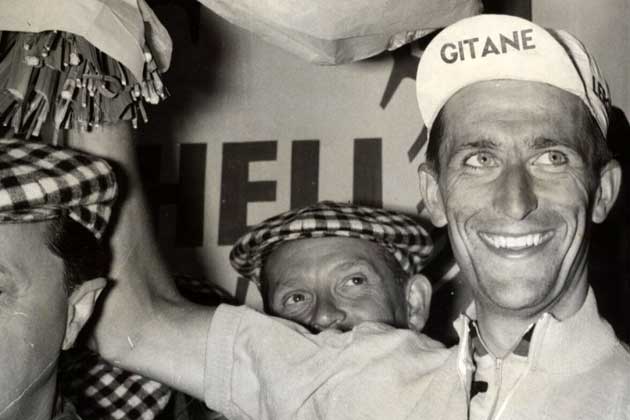 'This is where the British men's yellow jerseys story started' – New cycling museum planned in honour of Tour de France legend Tom Simpson
The proposed British Cycle Racing Museum will be located in Harworth, hometown of the British bike-racing legend
-
 Ultra-riding star and community figurehead Max Riese dies in cycling accident
The Austrian rider won the recent Hellenic Mountain Race and presided over the GravGrav community

