




Sponsor Content Created With

Climbing power indoors versus outdoors
Is there a difference, and why might that be?

Indoor cycling really took off back in 2020 during the pandemic. So much so that there are now professional E-Sports cyclists who make more of a living racing on MyWhoosh than the majority of professional road riders can make racing on the road. In fact some of the numbers put out by the likes of Jason Osbourne, who did race professionally on the road for Alpecin-Premier Tech, are astronomically high and up there with some of the best road riders. This isn’t just in terms of raw power, but in watt per kilo, a key metric in climbing performance.
But does this sort of massive power only produceable indoors, why might that be, and why do some riders struggle more with power indoors than others?

Are there differences to climbing indoors versus outdoors? Yes is the short answer
There are quite a few factors with regard to indoor riding versus outdoor as to why some riders may struggle more with power in either situation. If we start off with looking at why some people may actually struggle to produce power when climbing indoors more.
Firstly, indoor cycling can generate a lot of heat, but without the benefit of airflow to produce a cooling effect and allow sweat to actually lower our body temperature. Humans are not overly efficient, and for every joule of energy that goes to forward momentum on the bike, around 4-5 joules are generated and wasted as heat. This heat build-up can massively impact performance negatively, and with indoors often lacking the cooling of out on the road, that can make hard climbing efforts more difficult indoors.

Heat training has become popular in the WorldTour training regimes due to the negative impact heat buildup has on performance
Another factor is the resistance application. Some smart trainers, particularly higher end ones, are better able to simulate resistance and gradients. Given that platforms like MyWhoosh feature some long climbs (Endurance Climb is 57km long and goes 2600m up!), as well as steep ones (El Limonar 10.6% average and 14.6% max gradient), the trainer needs to be able to produce the relevant resistance to be overcome. Out on the road, gravity has that impact for us, giving us a force to constantly push against. It’s for this reason that some riders struggle to produce power on the flats versus the climbs.
However it can also work the other way around, where riders can produce better climbing power indoors than out. This is less the case in professional level races, where resistance has to be applied realistically, but riders can trick their smart trainer into giving them a helping hand. If you have the virtual climbing set to a lower level, you can ride a climb in a bigger gear. This in turn results in a higher inertia at the rear hub, more so than even a wheel spinning out on the road. This inertia means that slight micro-flaws in pedalling stroke do not result in a noticeable slowing down of the wheel. Whereas out on the road with lower inertia, a poor pedalling technique is exaggerated when climbing, especially steep climbs at lower wheel speeds.

Virtual climbs on platforms such as MyWhoosh can be made as hard or easy as you like
Additionally ERG mode can provide an unrealistic resistance, and is why I often recommend coached riders doing structured indoor sessions on the likes of MyWhoosh, that they don’t always rely on ERG mode. This teaches them to be better at low inertia climbing, as well as getting better at applying force against more realistically applied forces rather than artificial ones.
Another component of why indoor climbing might be easier for some riders, is that it is easier to apply power more smoothly without accelerations and decelerations that we experience out on the road as gradients change minutely. Also the effect of gradient on biomechanics. As we climb, our position on the bike remains the same, but rotated a few degrees as the gradient increases. But gravity remains to effect on a downwards angle, which can change lower limb biomechanics and muscle activation patterns. I actually did my dissertation on this, and it’s why indoor gradient simulators can be a useful tool for those training indoors for hilly outdoor events.

Indoor trainers such as the Wahoo Kickr Bike Pro has an in-built gradient simulator to help with muscle activation patterns
An additional biomechanical consideration, mainly for road racers, is that aerodynamics have no impact on indoor cycling. Out on the road, professionals need to balance an aerodynamic position with a comfortable one for climbing. Indoors, comfort and power output are key, even if that means a more upright position that out on the road would result in more drag.
Another factor that is now becoming increasingly apparent in elite indoor racing is the use of very low cadence, out-of-the-saddle climbing as a performance tool. Some professional riders are seeing increases of up to 10% above their normal FTP indoors by riding at just 50-60rpm and doing so out of the saddle for prolonged periods, in some cases for almost the entire race. In effect, this has become something of a new indoor “hack”. In the static and highly controlled environment of smart trainer racing, riders are able to hold positions and apply force in a way that is simply not realistic outdoors. On the road, balance, bike movement, traction, gradient changes and the need to respond naturally to terrain make that style of riding far harder to sustain. It is another example of how indoor climbing performances, particularly in E-Sports, can sometimes move beyond what is realistically transferable to outdoor racing.

Jason Osbourne has become well-known for producing huge watts at relatively low cadence levels by outdoor rider comparisons
Finally, cooling can actually be better indoors, if you get the setup correct. I used to do E-racing to a reasonably high level in 2020-2021, sitting in the top-10 globally upon a couple of occasions. With the massive heat build-up, my strategy was to use two fans, one placed at my head and torso, one at my legs, in addition to a rotation of ice packs for events up to 2 hours long to maintain an optimum body temperature. Compared to racing the Volta a Portugal in 45˚C, I was far better able to regulate temperature indoors, and produce far better climbing numbers there too. The consistent pacing of climbs virtually also made it significantly easier for me personally. But I also approached the two quite differently. In E-racing, you can afford to use a lower cadence, as although not as efficient in some ways, I found I could produce more power while remaining in a very static and stable position, not achievable on the road. The associated muscle fatigue for day after day performance was not an issue, whereas for stage races on the road that had to be factored in and meant a higher cadence was needed outdoors.
-
 'Your greatest competitors are also your greatest motivation' - the Kasia-Demi rivalry continues
After another fierce battle, Demi Vollering and Kasia Niewiadoma-Phinney explain how the sting of defeat and their mutual respect keep pushing them to new heights
-
 ‘I'm forever thankful for them' – Demi Vollering gets the rainbow jersey, but Worlds triumph belongs to the full Dutch team
New world champion talks about 'the guts' it took to ask her teammates to sacrifice everything for her


-
 'The difference between a good and great Esports racer can be found in marginal gains such as fuelling properly' – The secret lives of elite indoor cyclists
Top-flight Esports racers hit WorldTour-level power numbers, but most are not professionals. We meet the indoor elites juggling ambitious racing goals around full-time jobs
-
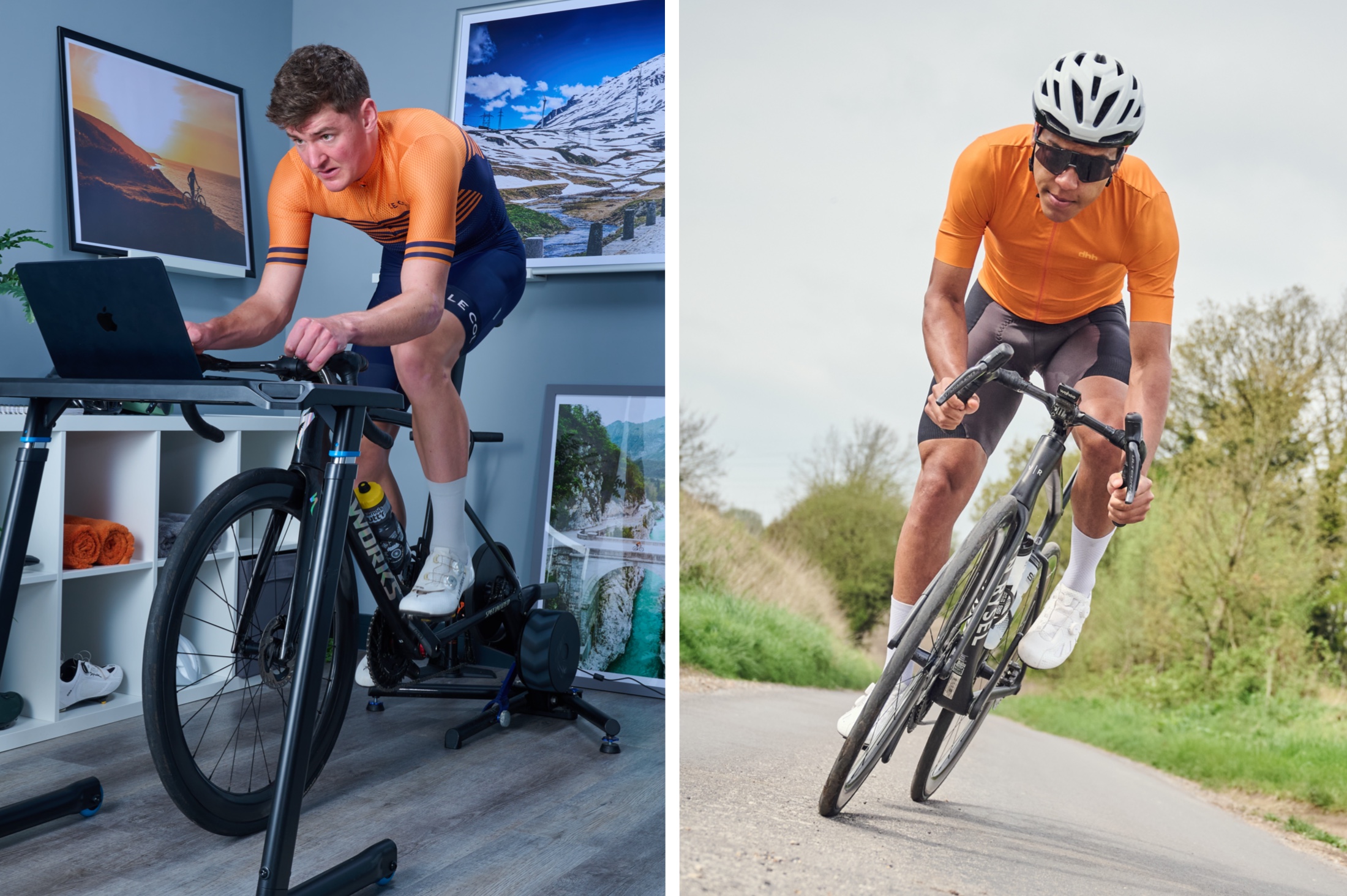 Intensity and enjoyment: how to combine indoor training with outdoor riding this spring?
As the weather starts to improve, here's your guide on how get the most out of your riding
-
 Take on the MyWhoosh UCI Cycling Esports World’s course like a pro
Two finalists reveal the stage-by-stage strategies that separate the podium from the pack. Exploit their insights to conquer the World’s course for yourself.
-
New Rwandan inspired virtual world added to MyWhoosh ahead of UCI World Championships
New route and a three-part challenge to unlock in-game updates
-
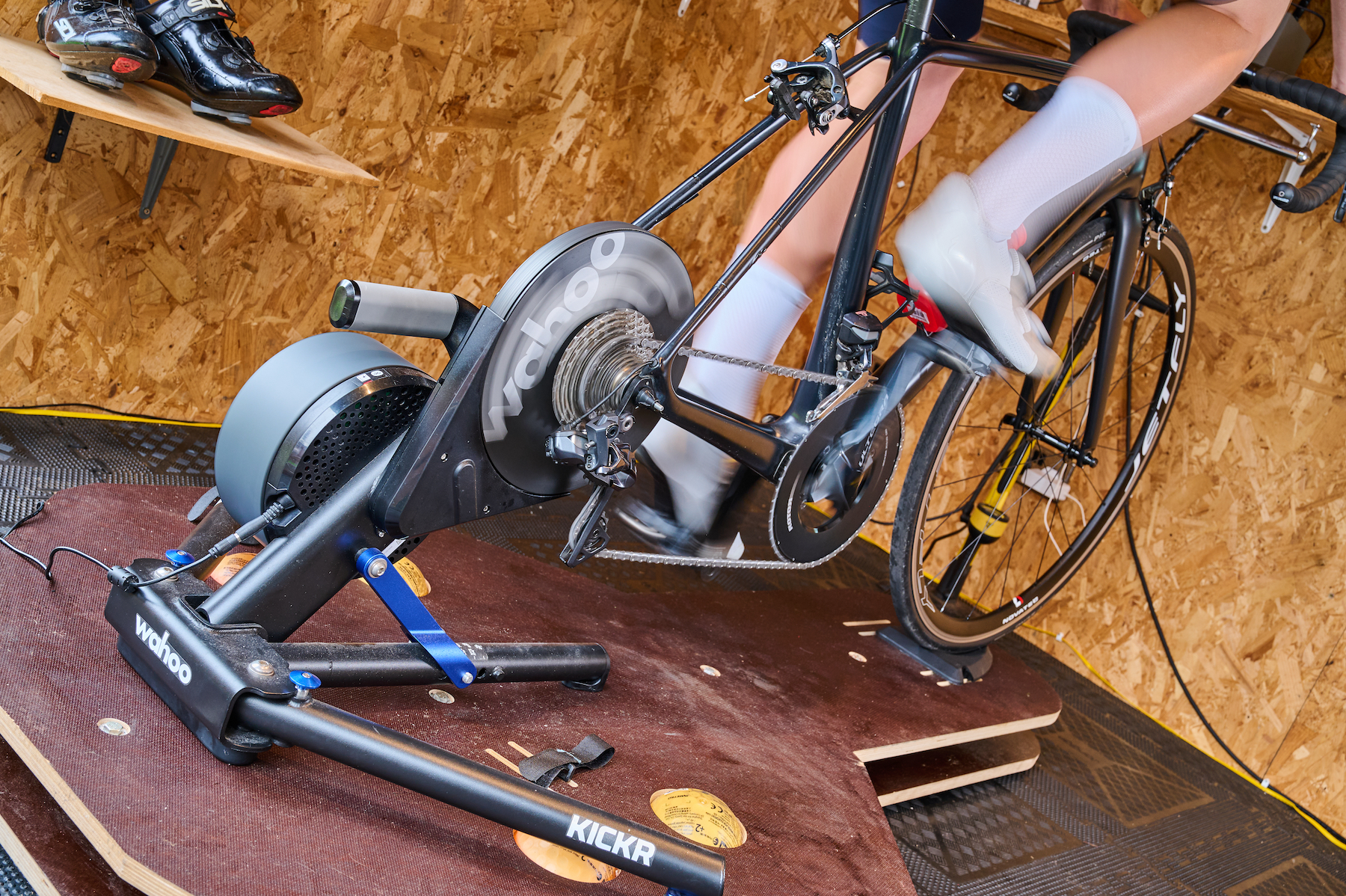 How to strike the perfect balance between indoor and outdoor cycling
You don't need to make a choice between riding indoors or outside –combine both for the ideal cycling mix for optimum performance
-
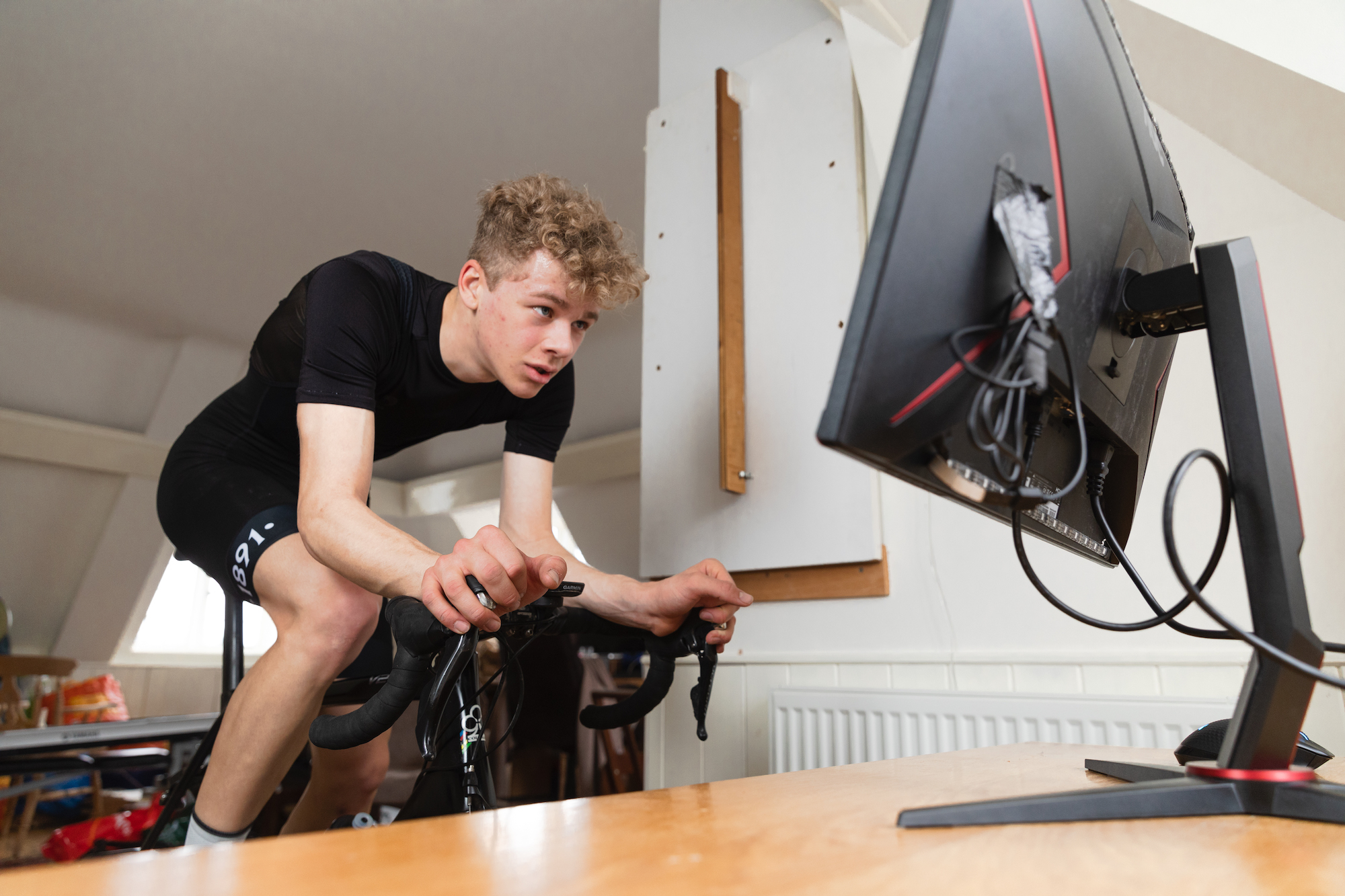 More bang for your bucks – is indoor cycling really harder than riding outside?
 -
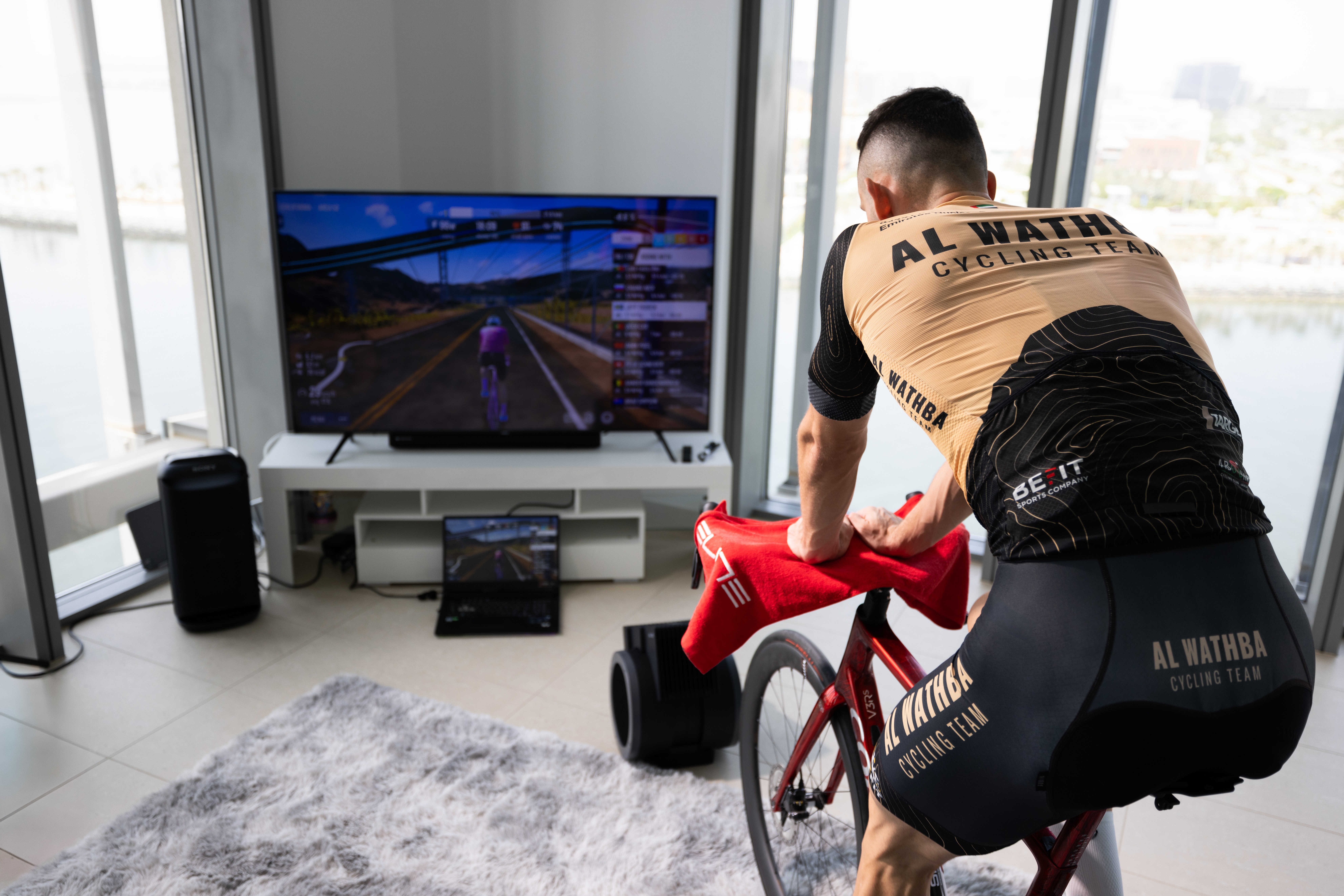 MyWhoosh x Cycling Weekly Hub
 -
 What is MyWhoosh? — What to know about the UCI's chosen virtual cycling platform
A complete guide to racing, riding and training on the UCI's chosen virtual cycling platform.


