




'Gravel is a wild west mentality, largely there are no rules' – as the oldest racer at Sea Otter, Ted King has seen it all
He talks to Cycling Weekly about his goals and being stronger at 43 than he was as a WorldTour pro

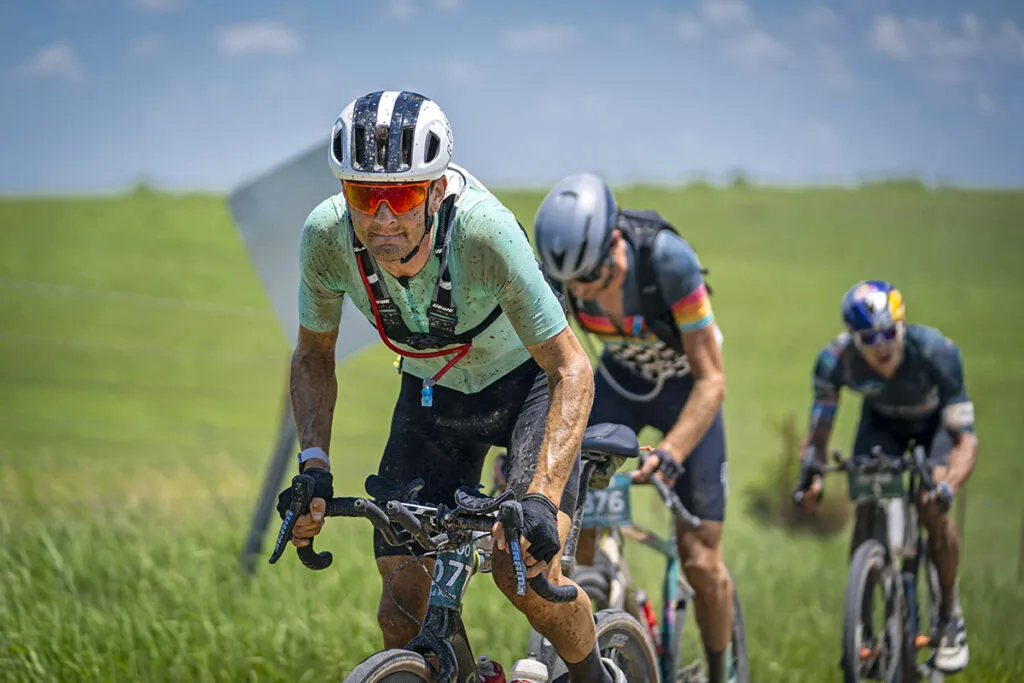
When I catch up with Ted King he is between two worlds. One represents a life he hasn't known for 10 years but which will always carry great meaning; and another encapsulates the modern incarnation of Ted King the bike racer.
He's in Belgium and France with sponsor Cannondale, and catching the season's biggest Classics; but as I speak to him he's packing up, ready to port to another dimension – the Sea Otter, California. Here on Thursday he'll line up as the veteran of the pack at the Sea Otter Classic gravel race.
At 43 years old the affable Vermonter will be the oldest rider in a race that will feature plenty of 30-somethings, yes, but a whole bunch of young blood too.
"I think I'm lining up to the race with more experience than anyone else… across all disciplines," he says. "I used to joke that I was racing kids half my age, and now I think the joke is the people I'm racing are closer to my kids' age than my own."
As usual, the Sea Otter kicks off the Life Time Grand Prix series and, as a festival of cycling and an important industry date, the Monterey, CA, event features a host of goings on. These include mountain bike races, a criterium, a challenge ride, and of course the Classic elite gravel event, which King will be riding. It's a bit of a family affair for King, whose wife Laura will be riding the elite women's event and, at the same age as he is, will be the oldest in her field too.
"What drives me back to Sea Otter is it's just such a festival," King says. "I don't go there with enormous goals from a results standpoint, but it's such a great test of early-season fitness that that is wonderful, especially coming from Vermont. I mean, it snowed at home two or three days ago."

King at this year's Sea Otter Classic
Following a WorldTour career with Cervélo Test Team and various Cannondale team incarnations, King became one of the first former road pros into the niche back in 2016, so he's seen gravel develop pretty much from the outset.
"It's fun to see the development of the sport," he said. "It's certainly not 'gravel 2016' which is what I experienced when I first stepped away from the WorldTour. What I often look back on is even in 2016 we weren't, we weren't necessarily calling it gravel even… it was such a new discipline that it was just sort of mixed terrain, or varied terrain, or a variety of words for it."
Among the biggest changes King has seen in gravel during that time have come from the industry putting its weight fully behind it and embracing the gravel 'brand': "Gravel bikes have come such a long way," he says.
From disc brakes to tubeless tyres and their current 50mm go-to width, King says it's also gravel's lack of rules that has helped the tech progress so fast.
"I think what's been part of facilitating the development is that gravel is just such a wild west mentality, there are, largely there are no rules. You can show up and ride and race on whatever bike you have cobbled at home, which originally was the case – that they were cobbled-together bikes. But now they're really gravel-specific machines."
There is also a vastly deeper pool of strong competition, he says, whether from the plentiful former pros coming into the sport at the end of their careers, or new talent coming up from the younger ranks.
"The level of competition is astronomical," King says. "People like that we can write our own script. That's something I really like about gravel, and I hope doesn't change as teams are coming to gravel.
"Being on a [road] team is great, but there's a level of anonymity that comes with that, unless you're a superstar. And subservience in a way. Like, you go where the team tells you to go."
However, as a gravel privateer, he says: "Certainly there are obligations with sponsors, but you get to create your schedule and programme, and I just think that's so much fun."
Such options are surely appealing to riders who may be disheartened by the struggle to forge a pro road career in the US, where opportunities can be limited. Gravel offers an open book and, says, King, "with enough ingenuity and resourcefulness and talent, you can put together a programme individually."

Leadinig the pack at the USA Pro Challenge in 2015
It's now around 10 and-a-half years since King rode the 2015 GP Montréal – his last race as a contracted WorldTour pro. But if you're assuming his form has quietly waned over that time, you'd be wrong. He spent several years just riding his bike a lot, which worked fine, until a post-Covid increase in competition convinced King that it was time to get himself a coach. According to the numbers, he's now stronger than he was as a WorldTour pro.
His FTP, for example, is now 439 watts, up from 425 as a pro in 2010, King candidly reveals. His VO2 Max has also increased. Much of that, he reckons, comes down to simply eating and recovering enough.
"So I got a coach in 2024, and I started doing intervals and training again," he says. "I mean, it is wild that I'm putting together a handful of training metrics that are just as good or better than what I was doing in the WorldTour. "Obviously nutrition has changed and resting has changed. And you know, I think I was – I know I was – perpetually starved and perpetually under fuelled [as a road pro]."
King isn't afraid to put that monster FTP wattage to good use – last year he won the Race Around Rwanda bikepacking race, for example. But you really get the impression that he is in this for the joy of riding and racing beyond chasing results. That said, there's some big stuff in the calendar: he plans to compete in the 350-mile Unbound XL this year, he says, although adds: "I feel like given the resources that I have in the time that I have targeting something a third the length is probably more wise"; but not Leadville this time: "That one has become such an arms race."
And he has definitely enjoyed being back in Northern Europe, exploring the old stomping grounds with filmmaker Chris Milliman and Cannondale. The idea, he says, is to make a film about returning to the pavé of the Tour of Flanders and Paris-Roubaix – races he rode twice each as a pro – and riding it on his own terms.
"[It's] basically about what happens when you come back and ride Flanders and Roubaix as a cycling tourist, without a team doctor and team nutritionist breathing down your neck from a decade ago when it was an era of starvation," King says. "Riding bikes with big tyres – then I was riding 26 or 28mm, and for this I was riding 38 and 48 millimetre tyres."
Having barely been back here since his WorldTour days, King says: "There's a special thing in the air. I experienced it in a lifetime gone by, but it was always on the other side of the fence. You know, you're in the team bus, and you sort of come out and sign an autograph or two and then go to the start line, or you're just spending the entire time in your hotel room.
"You never go to a bar, you never go to a for a tour, you never do all the things that I'm doing this time around," he adds. "And it has been, it's honestly just a dream trip. It has been nothing but a pleasure."
All too soon though, it will be time once again to say goodbye to this old world of his. Though the place he's going back to, Monterey California, doesn't sound half bad to us.
Ted (and Laura) King compete in the Sea Otter Gravel Classic on Thursday 16 April, starting 10am PDT.
