



'CAAD as CAAD was meant to be' — Cannondale launches long-awaited CAAD14
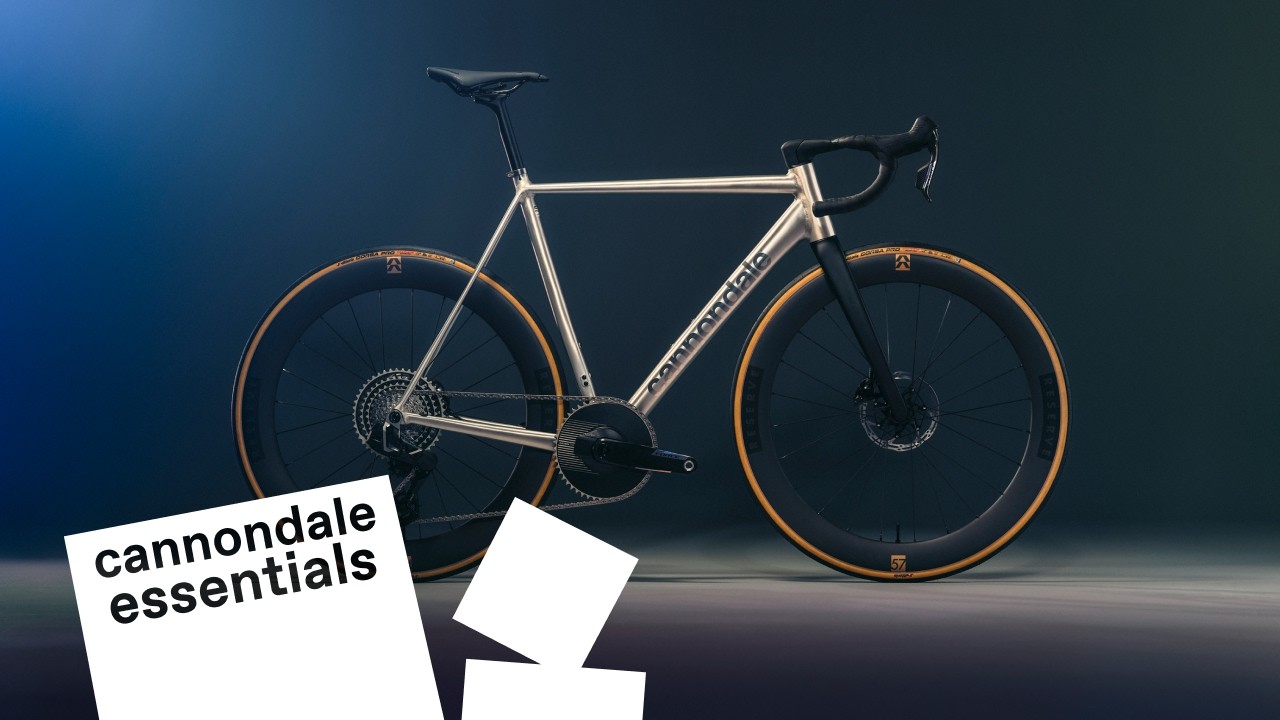
With CAAD14, Cannondale has reworked its flagship aluminium road platform with a clear goal: return the CAAD line to its roots while updating it for modern road riding


Some six years after the launch of the CAAD13, Cannondale has unveiled the much-anticipated CAAD14, the newest iteration of its legendary aluminium race bike.
It’s the bike many on our Cycling Weekly tech team have been most excited about this spring, and with its promised lively handling, classic aluminium character and modern road-bike features, it’s a machine that makes this former crit racer’s heart sing.
For decades, CAAD bikes have occupied a unique space in the road cycling world, delivering race-level performance without the price tag or perceived fragility often associated with carbon frames.
Stiff, fast and relatively affordable, the platform has developed something of a cult-like following among racers and hard-riding enthusiasts who believe performance metal still has a place in a carbon-dominated road scene.
With its newest model, Cannondale says it is bringing the platform back to its roots. Rather than shaping aluminium to mimic carbon race bikes, the CAAD14 was designed specifically around the material’s own strengths. The result, according to the brand, is a bike that returns to the oversized tubes, smooth welds and unmistakable silhouette that defined earlier generations, while updating the platform with modern integration, drivetrain compatibility and wider tyre clearance.
Let’s dive in.
"CAAD as CAAD was meant to be"

For most of its three-decade history on the road, the CAAD platform has served as Cannondale’s showcase for what high-performance aluminium can do. Introduced to road bikes with the CAAD3 in the mid-1990s (after first appearing on Cannondale’s F-series mountain bikes), the frames quickly built a reputation for delivering sharp acceleration, efficient power transfer and race-ready durability.
That approach shaped the distinctive CAAD look. Large-diameter tubes, purposeful shaping and clean weld finishes weren’t simply aesthetic choices — they were engineering solutions designed to extract maximum performance from aluminium.
As Murray Washburn, Cannondale’s director of product marketing, explained during the launch presentation: "Cannondale and high-performance aluminium are pretty inextricably linked. We brought high-performance aluminium to the party and we’ve been dancing with her ever since."
Over the years that philosophy helped establish CAAD as a benchmark for aluminium race bikes. But with the previous-generation CAAD13, Cannondale admits it took a different design direction — one that prioritised a silhouette closer to the SuperSix EVO carbon race bike.
While the bike performed well, the shift blurred some of the visual and material identity longtime CAAD fans associated with the platform.
"CAAD13 was where we sort of lost sight of what makes CAAD CAAD," Washburn said.
"CAAD13 was a great bike. Anybody who rode it knows. It was incredibly smooth, it was light, it did everything you wanted it to do. But we designed it to look like the Gen 3 SuperSix EVO. Rather than allowing aluminium to do what aluminium does best, we were trying to make aluminium look like carbon.
"It kind of lost something in the process… it failed to stir the soul of the Illuminati in the same way that CAAD has traditionally done."
With CAAD14, Cannondale says it has deliberately returned to its original playbook. Rather than trying to make aluminium resemble carbon, the new frame was designed around the material itself — bringing back the oversized tubes, classic proportions and visible craftsmanship that defined earlier CAAD generations.
"CAAD14 is a return to form… CAAD as CAAD was meant to be," Washburn said.
What's New

With CAAD14, Cannondale has reworked its flagship aluminium road platform with a clear goal: return the CAAD line to its roots while updating it for modern road riding.
In the words of designer Tanner Van De Veer, the aim was to create: "Something so desirable that someone would think twice about buying the carbon bike."
Key updates include:
- A return to classic CAAD frame design, including oversized tubes, smooth welds and a traditional double-diamond silhouette with a horizontal top tube and high seat stays
- Modern front-end integration using Cannondale’s Delta steerer system, allowing internal routing through the headset while retaining cockpit flexibility
- Universal Derailleur Hanger (UDH) compatibility
- Threaded BSA bottom bracket
- Standard 27.2mm seatpost for compatibility and simplicity
- 32mm tyre clearance for improved comfort and grip
- A new fork designed specifically for the CAAD14
- Updated geometry described by the team as a "classic long-and-low Cannondale race geometry" designed for agile handling
Who's It For?

Cannondale positions the CAAD14 for riders who want a performance road bike that stands apart from today’s carbon-dominated race machines.
While the brand’s carbon platforms focus on aerodynamic optimisation and marginal gains, the CAAD14 targets riders who value ride feel, style and durability.
Cannondale also sees CAAD14 as both an enthusiast bike and an entry point into performance road cycling. The platform is intended to appeal to longtime CAAD fans while attracting new riders discovering the platform for the first time.
"Not everybody is concerned about saving three watts and thirty grams," product manager Will Gleason said.
Instead, some riders want: "a beautiful, stylish bike that stands out, rides really well and makes a statement."
Gleason compared the ride experience to the difference between a lightweight sports car and a high-powered supercar.
While Cannondale’s carbon race bikes aim for maximum efficiency and aerodynamic performance, CAAD is designed to feel more engaging and playful.
"CAAD wants to dance and vibrate," he said, while the SuperSix EVO "wants to float."
Weights

| Row 0 - Cell 0 | Weight (kg) |
Weight (lb) |
Row 0 - Cell 3 |
CAAD14 1 |
7.9 |
Row 1 - Cell 2 | Tubeless w/ sealant |
CAAD14 2 |
8.8 |
Row 2 - Cell 2 | W/ tubes |
CAAD14 3 |
9.3 |
Row 3 - Cell 2 | W/ tubes |
CAAD14 Frameset |
1.8 |
Row 4 - Cell 2 | Medium frame (1400g) + fork (397g) |
A limited-edition raw version

Cannondale will offer the CAAD14 in multiple builds, including a limited raw-finish halo model, mid-range builds and a more accessible Shimano 105-equipped version, as well as a frameset option for custom builds.
The limited-edition “raw” version is intended to highlight the craftsmanship of the aluminium frame itself. The bike features a raw aluminium finish designed to showcase the material and construction details rather than covering them with paint.
For this version, Cannondale selects frames from production, hand-brushes the aluminium surface and applies only a thin layer of clear coat. The result is a finish that exposes the welds, brushing and other manufacturing details.
Gleason described it as a way of: "celebrating the craftsmanship and the hand-built nature that goes into these frames."
Because producing the finish requires additional hand work and careful frame selection, the raw version will be produced in limited numbers. Cannondale says roughly 300 units will be available globally, positioning it as a collector-style model that emphasises the material and heritage behind the CAAD platform.
Pricing

Model |
USD $ |
£ |
€ |
CAAD14 1 |
$7,499 |
£7,500.00 |
€ 7,499 |
CAAD14 2 |
$3,999 |
£4,250.00 |
€ 3,999 |
CAAD14 3 |
$2,499 |
£2,995.00 |
€ 2,499 |
CAAD14 Frameset only |
$1,799 |
£1,750.00 |
€ 1,799 |
A First Look