
The Tour de France 2026 starts in Barcelona next week with a team time trial around the city centre and an uphill finish in the iconic Montjuic Olympic park. It reaches the Pyrenees just two days later as the route takes the riders north back into France. The race finishes with two stages finishing at the top of Alp d'Huez.
Tadej Pogačar will once again start as race favourite, cahsing his fifth Tour win, while two-time winner Jonas Vingegaard is looking to do the Giro - Tour double after an impressive win in Italy this May
Several mountains will make their debut in the race, including the Montée de Gavarnie-Gèdre, Col de la Griffoul, Col du Page, Col du Haag, Plateau de Solaison and the Col de Sarenne.
The final stage in Paris will once again visit the cobbled climb of le Montmarte, as it did this year when Wout van Aert became the first rider at the race to drop Tadej Pogačar on his way to a stage win.
The three-week event is the second in the trio of Grand Tours, coming after the Giro d'Italia and before the Vuelta a España.
Read more: Tour de France 2026 route | Tour de France 2026 start list
Tour de France 2026: Key details
Date | 4 July 2026 - 26 July 2025 |
Total distance | 3,333km |
Number of stages | 21 |
Start location | Barcelona, Spain |
Finish location | Paris, France |
UCI ranking | WorldTour |
Edition | 113th |
Total climbing / elevation gain | 54,540m |
Leader's jersey colour | Yellow (Maillot Jaune) |
Last year's winner | Tadej Pogačar (Slovenia) |
Tour de France 2026: The route

Route map showing the stages of the Tour de France 2026
Tour de France 2026 route: Stage list
Stage | Date | Start | Finish | Distance | Terrain | Stage winner |
|---|---|---|---|---|---|---|
Stage 1 | 4 July | Barcelona | Barcelona | 19km | TTT | Row 0 - Cell 6 |
Stage 2 | 5 July | Tarragone | Barcelona | 182km | Hilly | Row 1 - Cell 6 |
Stage 3 | 6 July | Granollers | Les Angles | 196km | Mountains | Row 2 - Cell 6 |
Stage 4 | 7 July | Carcassonne | Foix | 182km | Mountains | Row 3 - Cell 6 |
Stage 5 | 8 July | Lannemezan | Pau | 158km | Flat | Row 4 - Cell 6 |
Stage 6 | 9 July | Pau | Gavarnie-Gèdre | 186km | Mountains | Row 5 - Cell 6 |
Stage 7 | 10 July | Hagetmau | Bordeaux | 175km | Flat | Row 6 - Cell 6 |
Stage 8 | 11 July | Périgueux | Bergerac | 182km | Flat | Row 7 - Cell 6 |
Stage 9 | 12 July | Malemort | Ussel | 185km | Hilly | Row 8 - Cell 6 |
Rest day | Row 9 - Cell 1 | Row 9 - Cell 2 | Row 9 - Cell 3 | Row 9 - Cell 4 | Row 9 - Cell 5 | Row 9 - Cell 6 |
Stage 10 | 14 July | Aurillac | Le lioran | 167km | Mountain | Row 10 - Cell 6 |
Stage 11 | 15 July | Vichy | Nevers | 161km | Flat | Row 11 - Cell 6 |
Stage 12 | 16 July | Circuit Nevers Magny-Cours | Chalon-sur-Saône | 181km | Flat | Row 12 - Cell 6 |
Stage 13 | 17 July | Dole | Belfort | 205km | Hilly | Row 13 - Cell 6 |
Stage 14 | 18 July | Mulhouse | Le Markstein Fellering | 155km | Mountain | Row 14 - Cell 6 |
Stage 15 | 19 July | Champagnole | Plateau de Solaison | 184km | Mountain | Row 15 - Cell 6 |
Rest day | Row 16 - Cell 1 | Row 16 - Cell 2 | Row 16 - Cell 3 | Row 16 - Cell 4 | Row 16 - Cell 5 | Row 16 - Cell 6 |
Stage 16 | 21 July | Evian les Bians | Thonon-les-Bains | 26km | ITT | Row 17 - Cell 6 |
Stage 17 | 22 July | Chambery | Voiron | 175km | Flat | Row 18 - Cell 6 |
Stage 18 | 23 July | Voiron | Orcières-Merlettee | 185km | Mountain | Row 19 - Cell 6 |
Stage 19 | 24 July | Gap | Alpe d'Huez | 128km | Mountain | Row 20 - Cell 6 |
Stage 20 | 25 July | Le Bourg d'oisains | Alpe d'Huez | 171km | Mountain | Row 21 - Cell 6 |
Stage 21 | 26 July | Thiory | Paris Champs-Élysées | 130km | Flat | Row 22 - Cell 6 |
Tour de France 2026: Essential reading
- Tour de France 2026 full route details
- Tour de France 2026 startlist
- Understanding what the Tour de France jerseys mean
Tour de France: The jerseys
The Tour de France jerseys and classifications are yellow for the overall leader, green for the leader in the points standings, polka-dot for the mountain classification, and white for the best young rider.
Along with the jersey prizes, there is an award for the most combative rider of each stage, with the winner wearing a red number on the following day. This is awarded each day, with a 'Super Combativity' award decided by a jury at the end of the race for the most active rider throughout the entire event.
There is also a team classification where the time of the first three riders from each team is put together to create a single time. This is then done in a similar way as the individual general classification.
In addition, there are bonus seconds up for grabs at the race. There are ten, six and four bonus seconds available at the end of each stage for the first three riders, as well as bonus sprints that are dotted throughout the race on key climbs to try and make the racing more entertaining for spectators.
Tour de France 2026: The teams
The Tour de France peloton consists of 23 teams of eight riders. One more team that previous years. This includes all 18 UCI WorldTour teams, as well as the two best-ranked UCI ProTeams, and three further squads that were invited by the organiser, ASO.
Tour de France 2026: General classification riders

Tadej Pogačar and Jonas Vingegaard stick together on Stage 20 of the Tour de France 2024
Tadej Pogačar will start the 2026 Tour de France as the outstanding favourite, having dominated every race he has ridden this year, winning everything he targeted other than Paris-Roubaix. If he does win he will join the five time winners club, adding his name to the list that includes Jacques Anquetil, Eddy Merckx, Bernard Hinault and Miguel Indurain.
2022 and 2023 champion and last year's runner-up Jonas Vingegaard will likely be his biggest rival and comes to the Tour after winning this year's Giro d'Italia. The Dane won at a canter, and did so seemingly over-exerting himself, something that will be key come the final week of the Tour when the race enters the Alps.
Winning the Giro meant Vingegaard became the eighth male rider to have won all three Grand Tours. His aim of completing the Giro - Tour double this year is arguably harder to do. In 2024 Pogačar became the first rider to do it in over 20 years, and prove that it was still possible in the modern era.
Red Bull Bora Hansgrohe come to France with a strong team including two third place finishers, Remco Evenepoel and Florian Lipowitz. Last year's fourth place finisher Oscar Onley pulled out with ten days to go due to a crash at the Tour Auvergne - Rhone Alpes.
Tour de France: previous winners
- 2025: Tadej Pogačar (Slo)
- 2024: Tadej Pogačar (Slo)
- 2023: Jonas Vingegaard (Den)
- 2022: Jonas Vingegaard (Den)
- 2021: Tadej Pogačar (Slo)
- 2020: Tadej Pogačar (Slo)
- 2019: Egan Bernal (Col)
- 2018: Geraint Thomas (GBr)
- 2017: Chris Froome (GBr)
- 2016: Chris Froome (GBr)
- 2015: Chris Froome (GBr)
- 2014: Vincenzo Nibali (Ita)
- 2013: Chris Froome (GBr)
- 2012: Bradley Wiggins (GBr)
- 2011: Cadel Evans (Aus)
- 2010: Alberto Contador (Esp)
Tour de France FAQ
How does the Tour de France work?
The Tour de France takes place over 21 stages, with the winner - the man who claims the yellow jersey - being the rider with the lowest cumulative time over the three weeks. Each stage has its own individual winner, but the person who wins overall might not win a single one of these.
It is one of the three Grand Tours, along with the Giro d'Italia and the Vuelta a España, and is the most famous and prestigious.
What makes up the Tour de France?
The race takes on varying terrain with flat days for sprinters, hilly days for puncheurs and mountains for the climbers and GC riders, along with time trials, so that a winner of the race has to be able to perform on all types of road.
What's the general classification?
The Tour, like all Grand Tours, The main prize in the race, known as the general classification, is based on time with the overall leader wearing the yellow jersey. The race leader and eventual winner is the rider who has the lowest accumulated time over the 21 days of racing. Riders can win the Tour de France without winning a stage, as Chris Froome did in 2017. Time bonuses of 10, six, and four seconds are given to stage winners though, creating incentive for those general classification riders to chase individual victories and lower their overall time.
In 2024 it took race winner Tadej Pogačar 83 hours, 38 minutes, 56 seconds to complete the race with the second-placed rider, Jonas Vingegaard, overall 6:17 slower. That continues all the way down to the last place rider, which was Mark Cavendish, who finished 6 hours, 23 minutes, 11 seconds behind.
Read our full general classification guide.
What are the other competitions?
The white best young rider's jersey is worked out in the same way but only riders under the age of 26 on 1 January are eligible for the jersey. This means anyone born in 2000 or after.
The polka-dot mountains jersey and the green points jersey are based on a points system and not time, gained throughout the race on climbs and at sprint points respectively.
The team classification is based on the general classification times of the first three riders of a team on each stage. The time of those three riders is added up and put onto their team's time, creating a GC list much like in the individual classifications. The leading team gets to wear yellow numbers and helmets on each stage.
The final classification available is the combativity prize. This is decided by a race jury or, in more recent years, social media. This takes place just before the end of each stage and often goes to a rider from the breakaway who has put in a daring performance or attempted to liven up the stage by attacking. The winner of the combativity award gets to wear a special red race number on the following day's stage.
There is a final prize added to this with the Super Combativity prize being awarded on the podium in Paris. This is decided in a similar fashion to pick out the most aggressive, entertaining, and daring rider of the whole three weeks. Again, usually going to a rider who has featured regularly in the breakaway.
Who rides the Tour de France
All 18 UCI WorldTour teams automatically qualify for the Tour de France, another five spots are given to 'wild card' teams, chose by organisers ASO. These places typically go to smaller French teams along with the best performing ProTeams - the category below WorldTour. Each team then picks it's eight man squad depending on the riders ability, form and the team's target for the race.
How long is the Tour de France?
The Tour de France takes place over 23 days with 21 of them being race days. The riders get two rest days that usually fall on the second and third Monday of the race.
How long is a stage?
Road stages can range from anything around 100km to something approaching 250km, sometimes more.
Road stages often take around four to five hours with the longer days sometimes nudging over seven hours.
Time trials are always much shorter. Team time trials have long since gone out of fashion in the world of road racing so individual time trials are the main focus these days.
When does the Tour de France start?
The 2026 Tour de France starts on 4 July in Barcelona, Spain, with a road stage and finishes in Paris three weeks later, with the traditional procession for the general classification riders and full-blooded sprint for the fast men on the iconic Champs-Élysées.
The 2026 edition of the race runs from 4-26 July, covering 21 stages.
Why isn't it starting in France
Foreign Grand Departs - the first three days of the race - are becoming more and more common for the three Grand Tours. Hosting three days of racing, and the build up, costs several million euros and it is becoming harder and harder for smaller cities to be able to afford it.
Taking the race to other countries also helps ASO introduce the race to new fans, and virtually guarantees massive crowds. The 2027 Tour will start in the UK. The 2026 Giro d'Italia is starting in Bulgaria
Tour de France 2026: On TV
As per this year, the race should be live-streamed on Discovery+ and TNT Sports in the UK. Subscription currently costs £6.99/month or $8.99/month, and £39.99 or $49.99 for a year. The race is also streamed, for the final time, on ITV4 in the UK, and is free to view.
A Flobikes annual subscription will cost you $209.99 if you want to watch in Canada, while in the USA NBC Sports via Peacock Premium ($4.99 per month) will show the race. Australians can can watch the Tour for free on SBS on Demand.
And, of course, if you want to watch your local stream from anywhere in the world you'll need a VPN from a trusted company like NordVPN.

-
 All the riders as they are announced: Tour de France 2026 start list
All the riders for the French Grand Tour
-
 'Their different strengths give us tactical options that could prove decisive' – Remco Evenepoel and Florian Lipowitz to lead Red Bull-Bora-hansgrohe at Tour de France
Jai Hindley also rides, after third at the Giro d'Italia
-
 Into the Pyrenees on stage three, and finishing with an Alpe d'Huez double-header - will this year's Tour route maintain three weeks of suspense?
Race to take place 4-26 July, with Grand Départ in Barcelona, before a clockwise route
-
 'I’m going into this year’s race full of confidence' – Biniam Girmay leads NSN Cycling at Tour de France aiming for sprint success
Marco Frigo debuts at the French Grand Tour
-
 Visma-Lease a Bike reveal team to support Jonas Vingegaard at 2026 Tour de France
Matteo Jorgenson, Sepp Kuss and Victor Campenaerts among names in squad, Wout van Aert absent
2 Comments -
 'I would say I'm stronger' – what does Tadej Pogačar's Tour de Suisse onslaught signal for the Tour de France?
A record-equalling fifth Tour victory seems more of an inevitability than ever
13 Comments -
 Tour de France highlights to be shown free-to-air on 5 in UK, TNT Sports announce
Highlights for all Grand Tours to be shown on 5, alongside live coverage of UK Grands Départs in 2027
3 Comments -
 'A crash during training has put a spanner in the works' – Wout van Aert out of Tour de France after elbow injury forces hospital visit
Paris-Roubaix winner to miss biggest race of the year
-
 After 91 of 154 riders finished a Tour de France warm-up race, will the risk of crashing reduce racing calendars further still?
The biggest bike race in the world is coming, and everyone wants to be at their peak
-
 Could the Tour de France Grand Départ change how Britain cycles?
With big hopes heading into the British stages next year, funding still remains a barrier to delivery
-
 The Tour de France's opening team time trial is going to set the race on fire, judging by the action at the Tour Auvergne-Rhône-Alpes
Get set for a GC-defining test in which almost anything could happen
-
 How does the team time trial at the Tour de France work? The individually timed format has a dress rehearsal at the Tour Auvergne-Rhône-Alpes
Expect to see lead-out efforts, rather than teams finishing in neat lines
-
 From Anquetil to Vollering, here are all the riders who have won the Giro, Tour and Vuelta
Jonas Vingegaard becomes the eighth male rider to have won all three Grand Tours in their career, while Demi Vollering is the second woman
-
 'I'm proud to open the doors to my new life' – Thibaut Pinot is turning his farm into an Airbnb for the Tour de France, and it's free
Frenchman offering three-night stay at his home with barbecue and helicopter ride
2 Comments -
 'With the right situation, I can win a Grand Tour' – Tom Pidcock sets retirement date and names biggest goal as Tour de France return looms
The British rider is heading back to the Tour after a year a way next month
-
 'A once-in-a-lifetime opportunity' – Tour de France calls for 9,000 volunteers for UK Grand Départ in 2027
Applications to work on the men's and women's races are open now
4 Comments -
 'I reacted in the heat of the moment' – seven times we have seen headbutts and punch-ups in the pro peloton
After watching Enrico Zanoncello get kicked out of the Giro for headbutting, we look back on some notorious incidents
-
 Ever wanted to drive a giant cauliflower at the Tour de France? This could be your chance
Supermarket sponsor, E.Leclerc, are on the hunt for their next driver
2 Comments -
 Tour de France 2028 to begin in Reims, France, with early June start due to LA Olympics
Stages set to start or finish in Reims, Charleville Méziers, Épernay, Verdun, Metz and Thionville in Grand Est
-
 'There will be a free-to-air product' – TNT Sports hints at free Tour de France coverage from this summer
WBD Sports boss says company is 'working through' what free coverage might look like
4 Comments -
 How to watch the Giro d'Italia stage 7: TV details, free streams, time schedule, for the race's first GC day
The Blockhaus stars as a summit finish in stage 7 of the Giro d'Italia — here's streaming details, including free options.
-
 'For The Love Of Cycling represents the next chapter' – Ned Boulting launches new pro cycling podcast alongside Never Strays Far
Broadcaster moves to Crowd Network with Never Strays Far audience in time for Giro d'Italia
-
 From Fausto Coppi to Tadej Pogačar: here are the eight male riders and one female who have won the Giro Tour double
Long thought to be impossible in modern cycling, Tadej Pogačar ticked off the double in 2024, and now the female peloton have it in their sights too
-
 Why is the Giro d'Italia starting in Bulgaria? Everything you need to know about overseas Grand Tour starts
It's not the first time the Giro has started abroad, and it likely won't be the last
2 Comments -
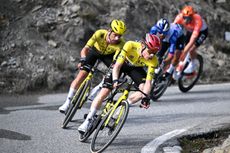 Why is Jonas Vingegaard wearing a special helmet at the Giro d'Italia?
The two-time Tour de France winner’s helmet is part of a sponsorship deal
3 Comments -
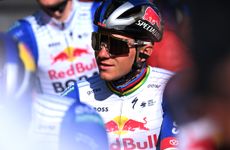 'The goal is to arrive competely fresh' – change of plans for Remco Evenepoel as he eyes Tour de France success
Pre-Tour racing also finalised for his Red Bull-Bora-hansgrohe teammate Florian Lipowitz
9 Comments -
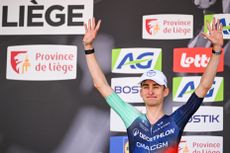 'Age is neither a hindrance nor an excuse' – Paul Seixas to ride Tour to France and become youngest rider in almost 90 years
Decathlon CMA CGM's young Frenchman has won seven times this year already
5 Comments -
 'I can see him on the podium in Paris at the end of the three weeks' – The case for sending Paul Seixas to the Tour de France
On current form, there’s only one rider in the world capable of getting close to Tadej Pogačar, but he’s not even 20, yet
4 Comments -
 'France probably hasn't had such a talent since Hinault' – Paul Seixas hype-machine continues after La Flèche Wallonne triumph
The only question left over the 19-year-old is: should he go to the Tour de France?
11 Comments


