



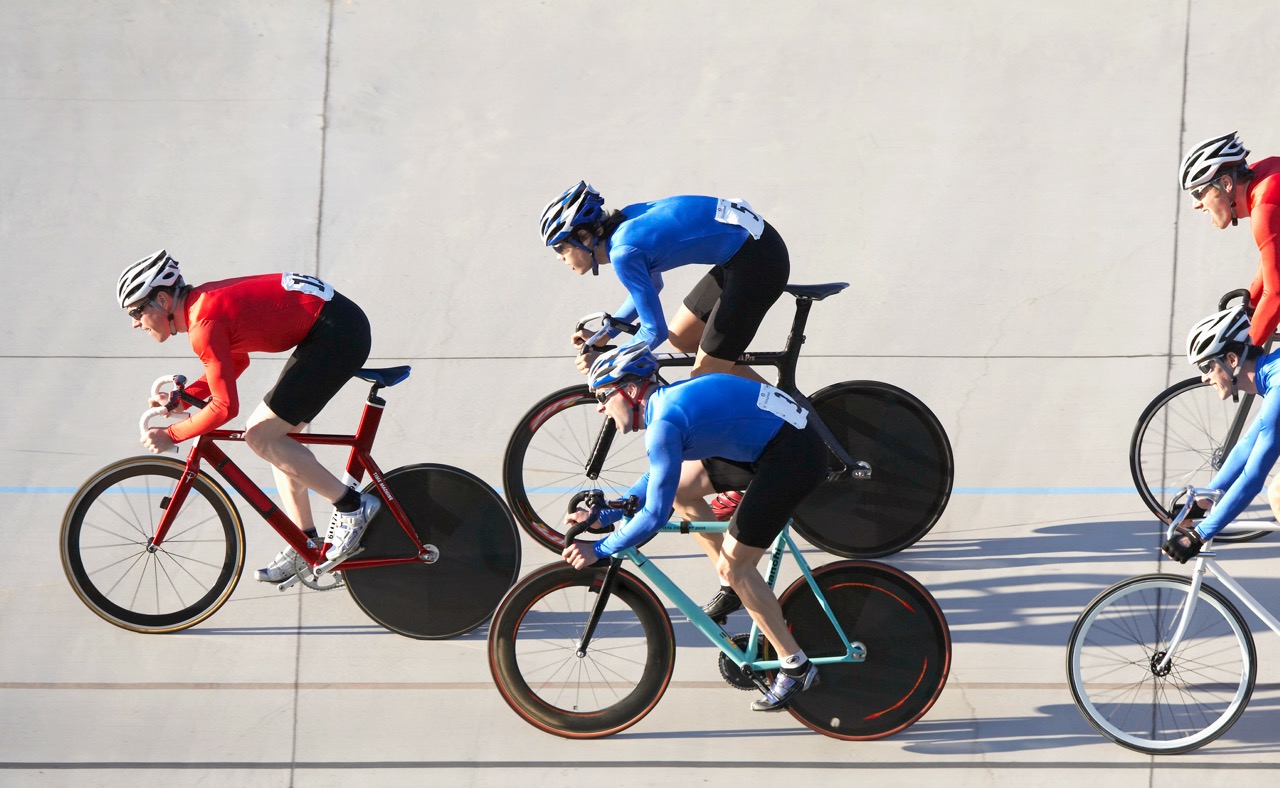


For a long time I thought that the biggest change I'd seen since I've been a bike rider was in clothing. New fabrics, better chamois pads, better fit, more sizes. It's 10 times better, and at only 20 times the price. I don't know in what festering mountain all the awful old polyester kit is refusing to rot, and I care not.
But recently I've realised that kit is no longer the biggest change. It's the best road bike tyres. If you can't remember the tyre technology of 15 years ago, you wouldn't be able to imagine it. It was a time of superstition and witchcraft. Of science-defying magic-formulae passed from generation to generation.
A time of madness. If you were there, if you can remember it, you probably still hanker after it. Even as your modern tyres do their job so well, you'll think back to the old ways. They were wrong, but they felt so right.
Let me tell you what the dream race set-up used to be, because it will bring tears to your eyes - tears of nostalgia or horror, depending on who you are. We wanted tyres thin, and we wanted 'em hard: 19mm, invariably tubulars, and pumped up to at least 120psi (8.5 bar).
But more often, if you had the pump and the bodyweight, 180psi. I had a Silca pump that would do 200psi. It had a bore of about five millimetres, so it took most of the morning to get there, one clenched teaspoonful of air at a time. It was worth it. When I squeezed the tyre, it felt like it had been filled with concrete.
The only other way to achieve that effect would have been actually to fill it with concrete, which would have been only marginally heavier - 200psi meant there was an awful lot of air packed into that little tyre. One consequence of this insane pressure was that punctures often sounded like gunshots.
My friend Bernard once crashed during a road race because he jumped at the sound of someone else's straining back tyre finally giving up the fight. It exploded with a report that echoed round the hills, sent crows squawking into the sky and Bernard yelping into a hedge.

Dr Hutch is a multiple national time trial champion, author and aero expert. His column appears in Cycling Weekly magazine each week.
Another consequence was that every ripple in the surface you were riding on was faithfully transmitted to you. I once claimed that riding Dugast tubulars at 220psi meant I could feel the wood grain on Manchester Velodrome track.
I was lying, but people believed me, because it wasn't that fantastical. Our beliefs were not founded in science. Science continually told us that wider tyres, at a lower pressure, were faster. We refuted the claims of science like this: wide tyres just looked so slow. If you pumped them up to a squishy 85psi, they even felt slow.
If you think a modern road bike looks fast, you should try imagining it with 19mm tyres. It would be like riding two circular saw blades. At speed on just the right sort of smooth road, the tyres would 'sing'.
This was a resonating vibration that 'science' would describe as wasted energy and which we described as the whole bike coming alive. It wasn't fast, but trust me, it felt fast. They were slow, they were uncomfortable. A crack in a road 20mm wide was deadly. (Although if it was dead straight, like a tramline, you could just about ride along in it .)
There is no measurable respect in which a modern tyre isn't better. Faster, more comfortable, more durable, cheaper. (Yes! Cheaper! Much cheaper!) But still, something in me hankers to have my teeth vibrated like they're receiving an alien transmission.
Great inventions of cycling: The drop handlebar
Drop bars go back further than you think. The geometry of a penny-farthing, with the big wheel coming right up between the rider's legs and the steerer above that, meant that a flat bar would produce an upright, elbows-out position with the hands a few inches in front of the chest.
A bar that drooped like a moustache over the rider's thighs was the only way to produce a rideable position. When bicycles started using smaller wheels and a chain in the 1880s, the drop bar stayed, at least for racers. It kept the hands low enough while keeping the bike wheelbase about right and having a steerer and head tube long enough to make the bike stiffness.
In the early era only the very end of the drop was ever gripped. It was the introduction of cable brakes in the early 20th century that led to riders adopting a position higher on the bar, using the metal hood of the brake as an additional grip. Drop bars are little changed from then till now, other than several million variations of bend, width and depth. These tweaks are partly driven by marketing, partly by changing use, and partly by the need to compensate for whatever fashion is going on with frame dimensions and stem height.
Nothing compensates for changing frame design quite as easily as a pair of bars shaped to put your hands where they were always meant to be. Modern bars are rather retro.
Dear Doc
Dear Doc, A couple of weeks back I found a crack in my carbon frame. Panicked, I took it to a local specialist shop and showed it to a mechanic. He contemplated the crack for several moments.
Then he licked the end of his finger, and wiped it over the crack, which immediately disappeared. So I've discovered that the easiest way to repair a crack in a carbon frame is with bike mechanic saliva.
Unfortunately the only way to get it seems to be out of a live bike mechanic, and this is deeply inconvenient.
Yours,
Francis McCabe.