

Does the weight of your expensive cycling shoes matter or are the claims as lightweight as the product? - the answer might surprise you
Do super-lightweight cycling shoes offer performance benefits that justify their hyper-expensive prices? We asked a top-scientist who modelled it and found out.


Super-lightweight and the best cycling shoes come loaded with some heavyweight claims and price tags. Sporting the catchy marketing slogan ‘The world’s lightest for the world’s fastest’, a pair of Specialized S-Works Torch Remco cycling shoes can be yours for the princely sum of £549/$699.99. Shaped with input from the great man himself, each shoe weighs just 148.2g (size 41), making them, according to Specialized, ‘the new benchmark for performance in the high mountains’.
Mass vs Weight?

“We tend to use the terms ‘mass’ and ‘weight’ interchangeably,” explains Professor Haake. “Weight is the downward force we feel due to the gravitational attraction of the Earth; in outer space we are ‘weightless’ although we still have the same mass of bones, muscles and squishy bits.”
Pity poor Pogačar. His £531/$759.99 special-edition DMT Pogis Superlight TDF Limited kicks weigh in at a comparatively elephantine 195g, albeit for a slightly larger size 42. I’m joking, of course. That’s still very light, but does shoe weight really matter? Do these staggering prices buy measurable performance gains, or are the claims as lightweight as the shoes?
To discover whether I’d be just as fast in more budget-friendly road shoes weighing 200 grams more and costing hundreds less – a pair of DMT KR4s or Specialized Torch 2.0s, for example – I enlisted the help of Steve Haake OBE, Professor of Sports Engineering at Sheffield Hallam University. For this exercise, we’re concerned only with weight, assuming that fit is optimal and sole stiffness is uniform across the board. First, let’s look at how a reduction in system weight influences performance before moving on to the effect at the crank.
Flat out
If you ride in the low-lying English Fens or the flatlands of southern Florida, your progress is unlikely to be troubled too much by gravity. “Pushing down on the pedals allows you to accelerate and reach your cruising speed after a few seconds,” says Professor Haake. “Push down harder at the beginning, and you accelerate faster, either reaching a higher speed in the same amount of time, or the same speed in less time. This is the essence of Newton’s Second Law, which says that the acceleration of a mass is proportional to the force applied to it, i.e. the greater the force, the greater the acceleration.”
Professor Steve Haake OBE

Steve Haake, Professor of Sports Engineering at Sheffield Hallam University, was awarded an OBE for services to sport in the Queen’s Birthday Honours in October 2020. Some two decades ago, he established sports engineering as a global discipline, becoming the founding editor of its first journal and building up the world’s largest academic research group in the field at the University of Sheffield.
The Law also establishes that acceleration is inversely proportional to mass, which means that a 7kg climbing bike will accelerate twice as easily as a 14kg commuter stalwart.
“Halving the mass doubles the acceleration,” confirms Professor Haake. “If we assume that the total mass of you and your bike is 80 kg, then dropping 200 grams (0.2 kg) is a reduction in mass of 0.25%. For the same force, you should accelerate 0.25% faster.”
If, like me, you find it challenging to visualise the real-world impact of small percentages like these, don’t worry. Dr Richard Lukes, one of Professor Haake’s PhD students, has developed a time-trial model that reveals the only metric most of us care about – how many bike lengths a lighter pair of shoes will move us closer to the podium.
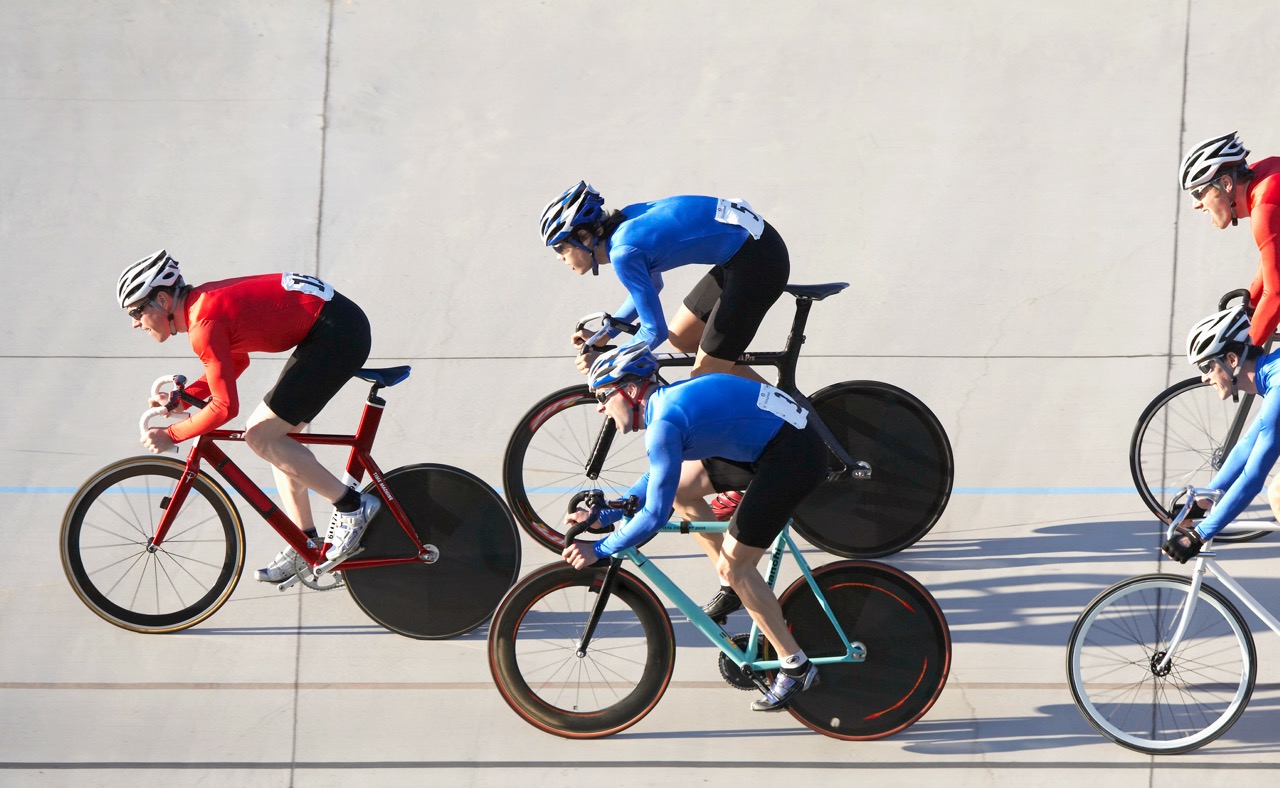
“The model begins with a standing start before proceeding 2 km or 4 km around a velodrome track1,” explains Professor Haake. “Dr Lukes has included everything in the model: the aerodynamic drag, the mass of the rider and the bike, the frame’s efficiency, even the banking and the scrubbing of the tyres as the cyclist corners. The combined mass of the rider, bike and all components was 80 kg; and a power profile from an anonymous Olympic cyclist, delivered via an SRM crank, was used to estimate the propulsive force of an elite cyclist over time.”

If you're a world-class rider, lighter shoes may gain you a third of a bike length, more than enough to separate podium positions in a tight sprint. Question is: are you a world-class rider?
At 80kg, the modelled cyclist took 2 minutes 11.56 seconds to ride 2km. Removing 200 grams reduced this time to 2 minutes 11.53 seconds, a difference of only 0.03 seconds. Why such a small difference? Surely there should be a 0.25% improvement in performance?
“The key here,” Professor Haake points out, “is that only a small portion of the ride has acceleration – the 10 seconds or so at the beginning. After this, the rider is at a steady state with their propulsive force counterbalanced by wind resistance and the rolling resistance of the tyres, plus a little energy lost in the frame, bearings and crankset. These forces are unaffected by a change in mass.”
Because the acceleration phase was only about 7% of the ride, and the mass changed by only 0.25%, it’s little surprise that this modest weight reduction changed the time by a mere three hundredths of a second.
“Bear in mind,” reminds Professor Haake, “that this elite athlete was travelling at around 35 mph (15.6 meters per second), so three hundredths of a second was actually equivalent to 18 inches (45 cm) on the finishing line - still enough to win Olympic gold rather than silver.”
Uphill battle

Would Pog, seen here climbing Mont Ventoux with Jonas Vingegaard, be even more of a legend if his shoes weighed 100g less?
As cyclists are well aware, the world is not flat, and many of us are more likely to find ourselves climbing Lakeland fells and French Alps than orbiting level velodromes. Put bluntly, cycling uphill kills speed because a small proportion of your weight pulls you back down the slope.
“A slope of only two degrees (equivalent to a 1 in 30 gradient) produces a backwards force equivalent to around 3.3% of your weight,” explains Professor Haake. “We can add this slope to our track model so that the rider goes up a gently sloping helix that rises about 20 feet (6.7m) each lap, like the on-ramp of a car park. The time for 2 km is now 2 minutes 57.01 seconds, 45 seconds slower than on the flat. Taking 200 grams off our weight reduces our time by 17 hundredths of a second to 2 minutes 56.84 seconds, equivalent to around 9 feet (2.6 m) at the finish.”
That’s a significant distance, a couple of bike lengths or more. When cycling up hills, mass is clearly important for cyclists with Olympian levels of skill and fitness.
A bit of a letdown

Reducing a small amount of weight results in a tiny performance penalty on descents.
So, what happens when you cycle down the other side of the hill? The small component of force that was dragging you back down the hill on the ascent also acts to pull you down the hill, albeit in the desirable direction.
“If we have the same two-degree slope but downwards,” says Professor Haake, “our virtual 2 km time trial that took 2 minutes 11.56 seconds on the flat now takes only 1 minute 45.91 secs, 25 seconds faster.”
Hold on, if cycling up a two-degree slope costs us 45 seconds, why is it that riding down the same slope doesn't gain us the same amount of time?
“It’s because aerodynamic drag is proportional to velocity squared, so that increasing speed by a third, say, increases the aerodynamic drag by 77%,” says Professor Haake. “Basically, you don't get back going down the slope what you put in going up it. If we now take off our 200 grams, we don't go quite as fast down the slope because the component of weight down the hill is smaller. This adds two hundredths of a second more to do the 2 km.”
When cycling down hills, reducing mass has less of an effect because aerodynamic drag is dominant, as you are going so much faster. If we make our hilly track model an out-and-back course, losing 200 grams still yields an overall performance gain, but this is slightly diminished by the downhill penalty.
Shoes are expensive, torque is cheap

Even for a rider of Pog's stature, reducing weight at the crank has no discernible performance gain beyond lowering overall system weight.
What about the rotation of the crank? Ah, that old chestnut. There’s nothing quite like the seductive sensation of slipping on a pair of featherweight cycling shoes before stepping towards your bike. They feel as light as silk slippers. Surely, the lower mass at the end of the cranks will make it easier to turn the pedals?
“Well, there is an equivalent version of Newton's Second Law for rotation that applies in this situation,” explains Professor Haake, “where linear acceleration becomes rotational acceleration and force becomes torque. It says that rotational acceleration is proportional to the torque, with torque defined as the force down at the pedals multiplied by the distance from the axle. Applying more force at the pedal increases the torque, which in turn increases the rotational acceleration of the pedals. As before, the rotational acceleration is also inversely proportional to mass: doubling the mass halves the acceleration.
“However, all of this only matters when the rotation is accelerating. Once up to speed, the continued input of just the pedals and cranks is only counteracted by a little bit of air resistance and energy losses in the bearings, which isn't affected by mass. The acceleration phase is really short, possibly only a few rotations, as we tend to ride at the same cadence if we can. This means the overall effect will be small.”
The effect is so negligible that Professor Haake predicts the influence of a 100-gram drop in mass at each pedal will be barely measurable...
In fact, the effect is so negligible that Professor Haake predicts the influence of a 100-gram drop in mass at each pedal will be barely measurable. To demonstrate how quickly your chainset reaches and sustains speed, he suggests removing the chain and turning the pedals by hand.
“They get up to speed pretty quickly and stay rotating for quite some time because well-maintained bearings are really efficient. You can strap heavy weights to the pedals, such as a bidon of water, and try again. It's more difficult to accelerate the pedals, but you still get up to speed after just a few revolutions, and if you take your hand away, they rotate for even longer. The acceleration phase is very small.”
So, if the effect at the crank barely registers, the only advantage of super-lightweight pedals is the reduction in overall system weight.
A small piece of the puzzle

There's more to high-end cycling shoes, like this pair of Fizik Powerstrap Aeroweave, than 'added lightness'.
Although some brands are guilty of shouting about shoe weight when, for most cyclists, it barely deserves a whisper, I’m happy to concede that there’s more to premium shoes than less mass. Greater development time and expertise will have been invested into a pair of Specialized S-Works Torch Remco shoes than into its budget stablemate, the Specialized Torch 2.0. It will be better made from finer, high-tech materials and will be entirely focused on performance – adding lightness is just part of the story, it just happens to make a great headline because competitive cyclists are obsessed with weight.
“Cycling is somewhat unique in that we are all able to access the cutting edge of technology, the exact same products that the professionals are racing with that season,” says George Huxford, Senior Marketing Manager, Fizik. “Weight is only one of the performance goals that pros and teams set for us – stiffness for power transfer, breathability, fit and anatomic function are all factors that our top-end footwear seeks to maximise. It’s these pro-level performance pieces that we then make available to riders and that you see at the top end of our product ranges.”
Huxford has a point. Regardless of how many competitive cyclists need top-end footwear, there’s plenty of demand from amateurs who want to look and feel the part. Cutting 100 grams from each side of the bottom bracket may not provide the kind of performance advantage many of us are capable of exploiting, but the confidence boost it provides may be enough to power a broad grin on every ride, if not a podium position.
“We believe that cyclists and designers share the view that great design is the effort to remove anything that is not required to support performance,” Huxford continues. “The removal of any excess weight, detail or distraction is key to how we evaluate our products. Unnecessary weight materially holds riders back from achieving their maximum performance, and any Fizik product is built to do the exact opposite.”
Conclusion

Riders at the very top of their game, such as individual pursuit champion Josh Charlton, will benefit from lighter shoes. The rest of us are probably better investing our time and money in better training, diet and recovery.
“The mass of cycling shoes does have an effect on cycling performance,” concludes Professor Haake, “although it's pretty negligible. This is due to changes in the overall mass of the bike rather than the rotation about the crank axle.”
As it happens, Specialized’s marketing slogan – ‘The world’s lightest for the world’s fastest’ – couldn’t be more apt. If you’re not among the world’s fastest riders – I’m happy to restrict that further to just sprinters and climbers – then super-lightweight shoes should hold little appeal. Frankly, there’s a long list of other performance enhancements to invest in first, including the less glitzy stuff that often gets overlooked, such as nutrition, sleep and coaching.
However, if wearing the very best – the absolute pinnacle of current cycling shoe goodness – brings you joy, then I get it. I’m all for choice, provided these hero products don’t drive costs up for the rest of us. It does, of course, go without saying that shoe fit and comfort must trump weight, no matter how much you’ve convinced yourself that you need the lightest shoes available.
References
1. Richard Lukes, John Hart and Steve Haake, An analytical model for track cycling. Proceedings of the Institution of Mechanical Engineers, Part P: Journal of Sports Engineering and Technology, Volume 226, Issue 2, June 2012, Pages 143-151