



Nationality: British
Date of birth: April 4, 1980
Team: Retired
If Sir Bradley Wiggins was once considered to be arguably Britain's greatest ever cyclist, now the argument is settled. His magnificently varied palmarès — not to mention his iconic status outside of the sport's die-hard fan base — have secured his position at the top of the tree.
Beginning his career predominantly on the track, Wiggins announced his talents with a win in individual pursuit at the 1998 Junior Track World Championships. Since then he has won six full world championships on the track, three in the individual pursuit, two in the team pursuit and one in the Madison. Even more impressive is his record in the Olympics, with gold medals at three successive Games in the individual pursuit (2004 and 2008), team pursuit (2008 and 2016) and, after his conversion to the road, the time trial (2012).
Wiggins's early years on the road were somewhat nomadic, beginning at the Linda McCartney team in 2001, then Francaise des Jeux (2002-2003), Credit Agricole (2004-2005), Cofidis (2006-2007) and High Road/Columbia (2008). As a time trial specialist he won numerous stages, but there was little hint of what was to come.
At Garmin-Transitions in 2009, Wiggins rode a superb Tour de France, finishing fourth behind Alberto Contador, Andy Schleck and Lance Armstrong. Following Armstrong's disqualification for doping, he was promoted to third, the best ever placing by a Briton in the race.
His move to the newly-formed Team Sky wasn't an instant success, until his overall victory in the 2011 Criterium du Dauphiné showcased his burgeoning abilities. The following year, he was unstoppable. First came overall wins at Paris-Nice and the Tour de Romandie, then a successful defence of his Dauphiné title — followed, incredibly, by that historic victory at the 2012 Tour de France.
That was the high point for Wiggins's road career, but there were still more achievements for him to claim. His 2012 Olympics win on the streets of London cemented his position not just within his sport but as a household name in Britain. His easy charm in front of the press was legendary and he won the BBC Sports Personality of the Year award, voted for by the public, to prove that cycling was smashing its way into the mainstream. The 'Wiggins effect' is credited with launching a boom in participation as his achievements inspired a generation to race, commute and ride sportives for the first time.

After missing the 2013 Tour de France through injury, and controversially missing selection in 2014, Wiggins instead focused on the World Championships, where he added yet more variety to his palmarès with a win in the individual time trial. It was to be his final hurrah as a top-level professional road rider. His final race in Team Sky colours was the 2015 Paris-Roubaix, but this was to be one fairytale too many.
Instead, Wiggins launched his own team and turned his attention back to the track, and the Hour Record in particular. Taking the line in the London Olympic velodrome on June 7, Wiggins smashed the previous record and set a new mark of 54.526km, cementing another entry in the history books for a rider who has always been an avid fan and student of the sport's folklore.
With that goal achieved, he rejoined the national team pursuit squad ahead of the Rio 2016 Olympic Games.The signs were good at the start of 2016, when Wiggins and Mark Cavendish claimed the Madison world championship title.
Then in Rio, he became Britain's decorated Olympian by winning a fifth gold medal – his eighth medal in total.
Rather than stopping there, Wiggins then carried his track form through to the Ghent Six Day in Belgium, where he partnered Cavendish once again to become the first British pair to win the prestigious track event.
Despite the wins, 2016 wasn't all smooth riding as Wiggins found himself at the centre of controversy relating to the use of medication. Illegally hacked therapeutic use exemption certificates were put online after Rio, showing that Wiggins had previously received injections of corticosteroids, including prior to his 2012 Tour win. This contradicted a passage in his autobiography that said he had not used injections. However, there was no suggestion of wrong-doing.
Later in 2016, further news broke that a 'mystery package' had been delivered to Wiggins during the 2011 Critérium du Dauphiné, sparking a UK Anti-Doping investigation and parliamentary inquiry into doping and TUE use in the Great Britain team and Team Sky.
Wiggins announced his retirement from cycling at the start of 2017, bringing to a close one of the most illustrious careers of any British cyclist.
His racing career is covered on these pages including news, race reports, interviews and photography. All his results are listed on our Bradley Wiggins rider profile page
Major results: Hour Record | 2014 TT world title | Tour de France 2012 | Olympics 2012 | Criterium du Dauphine 2011 | Olympics 2008

-
 'Today's a big day for me' – Bradley Wiggins launches AI coaching app
Tour de France winner one of six 'AI mentors' for The Coachsters
-
 'I've known occasions where a star's bike has attracted more attention than they did' – how to race against your heroes with Dr Hutch
Staying cool when a big name turns up at your local race is mandatory.
2 Comments -
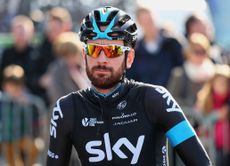 'Team Sky chucked me under a bus' – Bradley Wiggins on doping allegations
Former Tour de France winner says "it'll all come out" in interview to promote new book
19 Comments -
 'I'd not even looked at the TT bike since April': how one young rider returned from a broken back to win Britain's best-loved non-British time trial
Bobby Buenfeld spent months rehabilitating from his injuries after hitting a tree before making a winning a return at the resurrected Duo Normand
-
 ‘It's like a game of chess’ - how group psychology affects the tactics of the Tour de France peloton
Domestiques, sprinters, hill climbers and GCs. How exactly do teams work at the Tour de France?
-
 Bradley Wiggins announces new book: 'The most honest and personal one I've ever written'
Wiggins's latest autobiography, 'The Chain', will be published on 25 October
-
 French kit brand Ekoï launches kit collaboration with Bradley Wiggins
Wiggins says partnership is his 'reintroduction to cycling' and marks the second phase of his life
-
 'I was doing loads of cocaine... my kids were going to put me into rehab': Bradley Wiggins on recreational drug use, Lance Armstrong's help and finding a new love for cycling
Wiggins opens up on the personal trauma which engulfed him post-retirement and put him in some 'very dangerous' situations after he became addicted to cocaine
3 Comments -
 'Lance has helped me a lot in recent years' - Armstrong offered to pay for Bradley Wiggins' therapy
2012 Tour de France winner says he is in the 'best place' he has been his whole life in interview
-
 Claims against bankrupt Sir Bradley Wiggins’s estate double to £2m
Wiggins’s efforts to pursue money through the courts have been paused
-
 Mark Cavendish and Bradley Wiggins to reunite on the bike to raise money for US hurricane relief
The British knights will be joined by Jan Ullrich at the Gran Fondo Hincapie next week
-
 Bradley Wiggins 'a little bit nervous' as he returns to cycling
Former Tour de France winner set to ride bike again for first time in almost three years
-
'I should have paid more attention to my financial affairs' - Bradley Wiggins opens up about bankruptcy
Former Tour de France winner was declared bankrupt in June
-
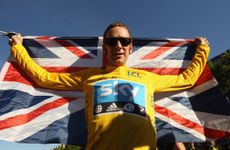 Bradley Wiggins: 'I was putting myself in some situations where someone would have found me dead in the morning'
Former Tour de France winner and Olympic champion reveals further details about his mental health struggles and suggests 2022 interview potentially saved his life
-
Bradley Wiggins joins Lance Armstrong for Tour de France podcast
The former Tour de France winner will be appearing on The Move for the next week
-
Exclusive: Cycling was a 'great distraction' says Bradley Wiggins as he opens up about trauma and mental health
Tour de France winner says he has found a "happy balance" with cycling in his life
-
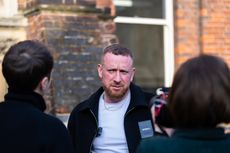 Bradley Wiggins declared bankrupt - reports
The Tour de France winner was in an Individual Voluntary Arrangement since 2020
-
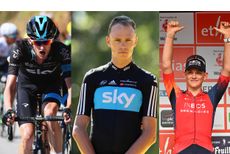 A complete history of Ineos Grenadiers kits, from Adidas to Gobik, via Rapha
The British team switch to Gobik in 2024 after two years with Bioracer
-
Bradley Wiggins says he suffered ‘borderline rape’ during three years of 'abuse' by coach
Speaking on Fearne Cotton’s Happy Place podcast, Wiggins says he now “hates cycling” and only ever used the sport as a distraction
-
 CW Live: Chris Froome targets return to 'top level'; UCI tightens ITT rules; Strava responds to price hike criticism; Topless protesters arrested at TDU; Tributes paid to Lieuwe Westra; Scott recalls 'cracking' bikes; Toon Aerts the PE teacher
The latest news in the world of cycling
-
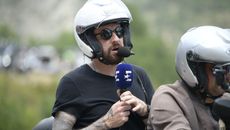 Bradley Wiggins might not be a TV pundit for much longer: 'I just want a normal job really'
Tour de France champion says that he doesn't still want to be on Eurosport in 10 years, and he thought about being a social worker
-
 Bradley Wiggins: Abuse contributed to making me a great cyclist
The Tour de France winner is part of a new NSPCC campaign to help people spot the signs of child abuse
-
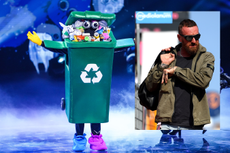 Is Bradley Wiggins Rubbish on ITV's The Masked Singer? We investigate
The wheely bin character was tipped to be the Olympian by one of the judges on the Saturday night TV show
-
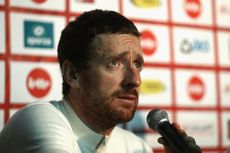 Bradley Wiggins backs NSPCC campaign for safer sports environments for children
Former Tour de France champion has spoken about abuse he received from a coach before
-
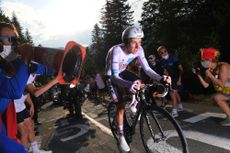 La Planche des Belles Filles: will today's Tour de France climb be make or break?
Primož Roglič may be looking to salvage his Tour de France by exorcising his 2020 demons on the brutal climb
-
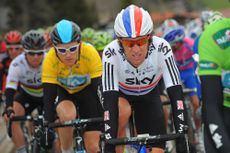 'Dismiss Geraint Thomas at your peril' — Bradley Wiggins sees Welshman as Tour de France 'underdog'
Ineos Grenadiers rider will head to Tour off the back of Tour de Suisse win
-
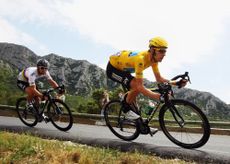 Bradley Wiggins: It would be a 'real shame' if Mark Cavendish wasn't at the Tour de France
Cavendish's former teammate and Madison partner thinks it would be "crazy" not to pick him
-
 British Cycling offers Bradley Wiggins 'full support' after allegations of sexual grooming
The governing body has contacted Wiggins after he alleged he was sexually groomed as a 13-year-old
-
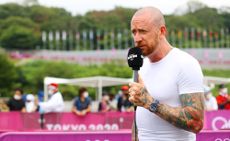 Bradley Wiggins alleges that he was sexually groomed by a coach as a 13-year-old
Former Tour de France winner says that it "impacted" him as an adult after he "buried" it


