




I've been bike commuting for 20 years, here are 14 mistakes everyone makes to begin with
With rising petrol prices, replacing regular car journeys with bike rides is sensible as well as enjoyable - just try and avoid these pitfalls

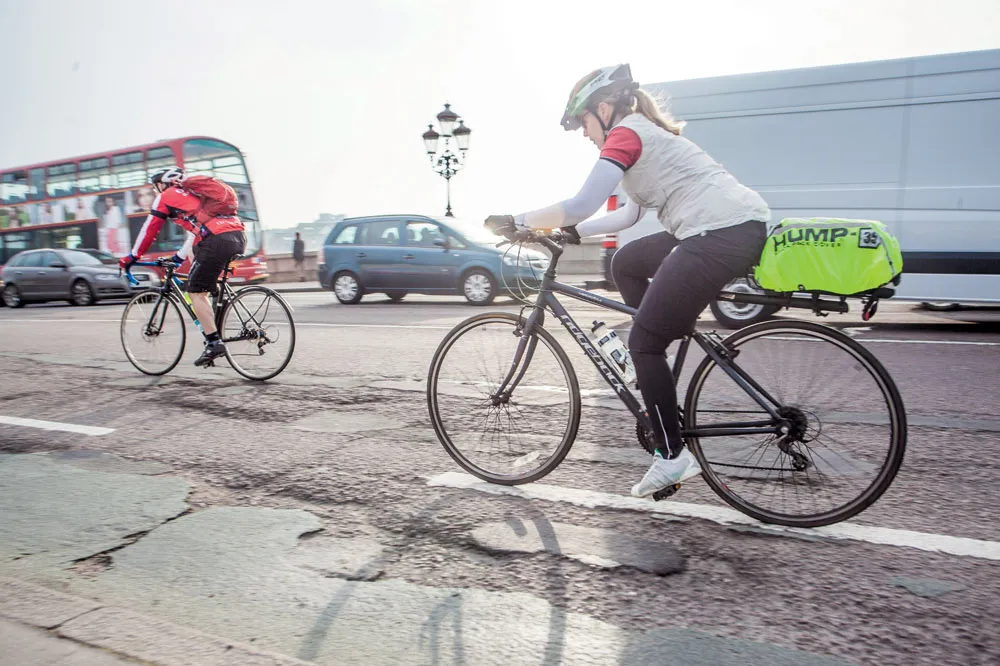

I began commuting by bike over two decades ago, but my relationship with riding to work continues to grow. So much so, in fact, that I find myself setting the criteria of where I work and live dependent on whether it’s rideable. Be warned, cycle commuting can change your life. .
Like many now-committed commuters, I wasn’t a 'cyclist' when I began – I started cycling to work on an old mountain bike out of financial necessity, as the cost of travel was getting ever more expensive. Then, following the acquisition of a Brompton folding bike, commuting became a necessity for me, and not for financial reasons.
Over the years, I have continually adapted my commute, my choice of route, and of course my bike, all in the name of keeping the journey a joy. And now, for those of you looking to take to two wheels, I'd like to share a few of the mistakes I made, and offer some advice that will, hopefully, help you to make the most of your commute, and even enjoy it.

A quality lock like this one is worth the cost
1. Buying a cheap bike lock
This is a common mistake, and one that I made. The reason it's number one in my list of advice? My first bike was stolen. After that I quickly upgraded to one of the best bike locks I could buy. Which in turn allowed me to buy a better bike, safe in the knowledge I wasn't going to lose it. When looking at locks there are several things to consider, most importantly look for a Sold Secure lock. This is an independent company that tests locks and rates them. Their rating is trusted by insurance companies, many of which will insist on a silver or gold rated lock if you leave your bike outside or in an unsecured area.
If you’re getting your bike through a scheme like Cycle to Work, don’t forget you can add accessories to the bundle like locks, lights, helmet and so forth. While we're on the subject of security

Sam Jones has worked for nearly 10 years in cycling advocacy and communications. Formerly the Cape Wrath Fellowship custodian, he is a freelance commentator on cycling issues who works in the Surrey Hills on countryside access issues and a keen bikepacker.
2. Buying the wrong bike light
When it comes to lights, brighter does not automatically mean better. It's better to buy the lights you need for your commute route. I made the mistake of buying the brightest light with the most lumens when I moved to the countryside, but it was awful for illuminating rural lanes. In an urban environment a bright light with a focused beam but minimal spread might be all you need.
But if your commute includes unlit roads your light beam needs to be wider, to light up more than just a narrow spot in front of you. Test the breadth of the beam before you buy a light; there’s more advice on buying the best bike light for you in our dedicated guide.
A few more tips: position your lights dipped towards the road to avoid dazzling other road users (if you blind them, even briefly, there's a small chance it could cause an accident). Also, keep charging cables at home and at work – and leave them in your commuting bag when not in use, even in the summer months. You can also attach small daytime running lights to your bike which, while not lighting the road, will allow you to be seen by other road users.

You need a bike light that suits your commute route
3. Going without mudguards/fenders
Some urban riders think they're too cool for mudguards, but you soon overcome any such misplaced vanity once you begin commuting five days a week throughout the year. It's far more embarrassing to turn up to work with a huge mud stripe up your bum and back. I tried all sorts of waterproof jackets and waterproof trousers, but they all failed where the best mudguards triumphed. An additional benefit to fitting full mudguards is they keep you and the bike clean(er) – meaning that components last longer with less bike cleaning. You'll want to keep your shoes and socks dry too, which a front mudguard can do if there's surface water around.

A good quality pannier rack can come in handy
4. Shouldering all the weight
While there are lots of good commuter backpacks out there, if you have to carry anything of significant weight my advice is to invest in a quality pannier rack for your bike, and a waterproof bag. I have used satchels, messenger bags and rucksacks, and while convenient, they can put added pressure on your backside as the weight sits directly above.
They can also lead to a sweaty back even in the depths of winter. And being top heavy on a bike is not great for balance. With a rack and panniers, these problems are instantly removed. Excellent brands like Ortlieb and Tailfin produce racks that fit any bike.
5. Not knowing how to fix a puncture
Oh the shame of walking your bike to the nearest station or all the way home instead of fixing the problem and get back on and riding. I experienced that deflated feeling early on in my cycling life. It was lucky, I guess, that it happened on the way home, rather than the way to work, but it still meant a long, unnecessary walk back to my front door, which would have been a short ride if I’d only known how to replace an innertube, and check the tyre for splinters, flints and general debris before refitting. If you're new to riding, it's worth practicing this at home first. Learning how to use the tyre levers and roll a tyre on and off the rim is essential. You don't want to be doing this for the first time at the side of the road and making yourself late for work.
6. Making do with any old tyres
This leads us perfectly into the next piece of advice. Choosing the correct tyres. There is an overwhelming amount of choice when it comes to tyres, with different treads, compounds, widths and more. All of this is in part dictated by the type of bike you have and therefore the size of wheels.
In general we'd suggest you go for the widest tyre that will fit in your frame, and the heaviest compound. Thinner, lighter tyres are performance focused, so you don't need to worry about these when commuting. You can check out our guide to the best puncture proof tyres for more information or check in at your local bike shop. Wipe them down as often as you can and as you do, check for flints or splits in the tyre itself. And not just the tyre tread. Check the sidewalls too.

A puncture needn't be a drama if you're prepared
7. Leaving your tools at home
Of course, it’s no good knowing how to fix your bike if all the tools you need to fix it are at home. I leave a tote bag with a multi-tool, mini pump, spare inner tube (two if you have room) and puncture repair kit in the bag I use for commuting. A tyre boot is also worth looking at (Even a home made one - a one inch / three cm wide section of a toothpaste tube will do it.) as they take up no room and are life savers in the event of a split tyre. In the winter months, I take me lightweight head torch to help during those night time fixes.
8. Having no spare clothes at work
I always kept a suit, shirts for the week, and shoes in the desk drawer at work, wearing my normal everyday clothes for shorter commutes. This meant the time I rode in without waterproofs and the heavens opened, I sat in damp underwear for the day - a mistake I never made again. Now I leave spare socks and pants at the bottom of my drawer. Of course, if you’re riding in sports kit and wearing cycling shorts (with which you should never wear pants) then you definitely don’t want to make the mistake of leaving underwear at home.
9. Spending unnecessary money on cycling-specific items
When you start commuting – especially if you’re completely new to cycling – it’s easy to think everything you wear on the bike needs to be designed exclusively for riding. Cycling specific kit is great, and designed to make riding more comfortable, but it isn’t always necessary for a commute, especially if it's just a mile or two long.
If you’re riding a hybrid and have a decent breathable waterproof jacket already, you probably don’t need a race cape designed for riding hunched over the drops of a road bike. As soon as something is labelled as cycling specific, expect the price to go up (especially with tools), so it’s worth exploring less specific alternatives. I enjoy hiking, and I’ve found my breathable waterproof jacket and trousers work perfectly well on the bike.
Similarly when it comes to the Allan keys you need to work on your bike. They're all standard sizes and your local hardware store will have a set at wallet-friendly prices (and before you buy any, check your tool box - if you’ve ever bought flatpack furniture you'll likely have some already).

A regular service keep your bike running smoothly
10. Not servicing your bike
One thing not to scrimp on is an annual visit to your local bike shop for an annual service. You wouldn’t (hopefully) forgo giving your car an MOT and service each year, so don’t with your bike. Prevention is always better than cure, and regular care will identify problems before they can happen, saving money and mid-ride breakdowns, as well as ensuring your bike rides as it should. Don’t forget to keep your tyres at the right pressure (see the sidewall for that) and your chain lubed.
11. Not knowing the rules of the road
Most cyclists also drive, so they know the rules of the road. However, your perspective changes dramatically when you start riding bikes on those same roads. While the principles are pretty much the same whatever vehicle you’re using, the way you ride – where you position the bike on the road, avoiding the 'car dooring' zone, approaching junctions, those three (or more!) point checks before manoeuvring – will be different compared to the experience behind the wheel. Take a look at our page on cycling safely on the road for more tips, and look up local training if you’re unsure.
12. Simply replicating my drive to work
Similarly if you’re making the transition from driving to cycling to work, you might be tempted to follow the route you normally drive. Outside of strong cycling nations like the Netherlands or Denmark, that’s likely to have you battling with traffic, on main roads, often with little in the way of cycle infrastructure to make you feel safer.
Your bike will open up new ways to you, that are either closed to driving or just not as convenient – and likely to be quieter and more enjoyable too. Tools like Cycling UK’s Journey Planner, Komoot, RidewithGPS or Strava navigation can help you plot the quietest and flattest routes for cycling, which you’ll soon begin to know like the back of your hand.

Use a journey planner for a more enjoyable route
13. Not supporting the cause
You know that safe segregated cycle lane which allows you to concentrate on riding and not worry about anything else? It didn’t spring out of the good intentions of your local decision makers. It’s down to your local and national cycling organisations working tirelessly over the years to make the world a better place for bike riders. If you want better cycling infrastructure in the future and for cycling’s voice to be be heard at all levels of government, then support these organisations by joining or donating.
14. Thinking I have to do it every day
You know it’s OK not to commute by bike every day, right? Maybe it’s icy, you’re under the weather, you’ve got to pick up the kids, or perhaps you just don’t feel like it. Commuting by bike is just one of your options for going to work – it’s probably the best one and will continue being the best one so long as you enjoy it, so don’t force it.
