Best women’s road bikes 2026: 6 top-rated performance first picks, proven by our female experts
Our women's cycling experts have tested and rated some of the best road bikes for women, while delving deep into what makes a road bike 'female specific' and whether you actually need one
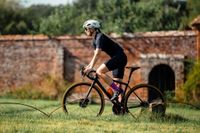

Selecting one of the best women's road bikes to be your new steed is not always an easy task to get stuck into. Not only do you have the choice of the still widely available women's specific models, but also the entire range of men's or unisex best road bikes.
Whether women-specific bikes are required remains an ongoing debate, but in the here and now, 2026, there is less and less call for them. Many brands have moved beyond the concept and now offer a much greater range of sizes, along with increased options to dial in the fit. That said, there are still options available for those who do want a women-specific road bike, and we feature both in this guide. For example, our best overall model, the Liv EnviLiv Advanced SL, which is the female-specific road bike arm of Giant Bikes, is highly rated by Hannah Bussey, an ex-Pro Women's World Tour racer and one of the longest-serving CW writers.
If you’re looking for a specific kit to pair with your bike, consider our guides to the best women's cycling shorts and the best women's bike saddles.
The Quick List

The EnviLiv is fast, comfortable, lightweight, and handles exceptionally well. It’s pretty much perfect when it comes to riding.

There are lighter, faster and snappier bikes than the V5Rs from Colnago. However, the more I rode it, the more enjoyable it became. Its understated nature and competence will draw you in.

The Langma is raced at WorldTour level, but you don't have to pin on a number to enjoy the light yet stiff frame that makes it adept at both climbing and sprinting.

The Filante SLR is light, stiff and agile, but still delivers enough comfort for longer days in the saddle.

Despite being the cheapest bike reviewed, the Triban still boasts an 11-speed Shimano drivechain and cable hydro disc brakes. A host of mounts make it a practical steed, too.

Steering away from excessive aero profiling and more towards a well-rounded package, Merida achieves this with excellent value and a great entry into an electronic shifter that goes far beyond the specification itself.
Best women's road bikes 2026: our experts top-rated
Best Overall

The fact that Liv/Giant launched the new EnviLiv & Propel together in the mountains of southern France was the first sign that this bike was no longer just an aero bike. In fact, while its aero performance is very good, Liv have managed to drop weight significantly. Overall, it is down over 7%, putting it within just 120g/4.2oz of the Liv Langma, their dedicated 'climbing' bike.
While weight is the headline, Liv have been able to stiffen the platform (up 19%) and improve compliance (25% more than its predecessor), something I welcomed as I moved from the beautiful roads of the Alps at launch to completing my testing on the pot-holed lanes of the Peak District.
The new EnviLiv is happy to tackle any road you point it at, especially when out of the saddle, the chain of command is clear and almost immediate. It sustains speed almost effortlessly, allowing you to maintain a comfortable, aerodynamic position.
The new Cadex 50 wheels are clearly a major factor in the bike's improved performance, but unlike the 2023 I tested, it's now a joint effort, rather than previous models, where the wheels were doing the heavy lifting.
The EnviLiv is fast, comfortable, lightweight, and handles exceptionally well. It’s pretty much perfect when it comes to riding. The integrated seatpost might put some off, if you ever plan to sell it, given the price tag, which is close to my annual salary, it's probably a bike for keeps. And, it'll be worth it!
Most versatile women's road bike

The V5R is still in regular rotation with none other than Tadej Pogačar despite having access to his own custom Colnago Y1Rs. Given how understated the V5R is, I was intrigued to find out for myself what Tadej still loves about this bike.
It's quite a bit lighter, 12% to be exact, and aerodynamically saves 9 watts over its predecessor, the Colnago V4Rs, which the CW team rated five out of 5, a few years back.
What took me by surprise the most about the V5Rs, though, was not any one detail in particular; I didn't actually notice. It was my riding buddies pointing out how often I kept turning up to rides on it. As you'd expect from someone who has multiple bikes on test at once, it's rare for friends to see me on a bike more than a couple of times.
While it didn't 'Wow' me immediately, the V5Rs' handling did. It's remarkably balanced, in no way punishing, light but not at all twitchy. It was this understood nature and the trust I built with the bike that outlined my time with this wonderful bike.
For all my praise, for many, this 'climbers' bike will be too heavy out of the box, given that most are still not as aero as this the V5Rs, although many are catching up, like the Scott Addict RC Aaron recently reviewed. The price is also totally irrelevant in this instance. If you are considering a Colnago, you likely will know that it's an investment, or that money is no object.
To conclude, the V5Rs is very capable. From the moment I clipped in, it felt like my bike, not a loan or test.
Read Rook's full Colnago V5Rs Road Bike review
Best lightweight women's road bike

While the updated Langma Advanced keeps the same race-orientated geometry of the previous model, there have been some notable updates. The carbon frame now uses a monocoque construction, with an upgrade to both the raw material and the resin, which Liv says reduces weight but adds stiffness. Claimed weight for the Pro 0 frameset is 1600g.
The tube profiles have also been updated, with new airfoil sections featuring on the down tube, seat post and fork, all designed to lower drag across a wider range of angles. There’s also fully integrated cabling throughout.
As for the components, the Pro 0 comes equipped with both the redesigned Liv Contact SLR bars and a Cadex Max 40 wheelset alongside the reliable Shimano Ultegra Di2 groupset, that delivered ab impeccable shifting and braking experience throughout the review period.
When it came to the ride, we found it hard to fault the Langma. It’s just such a well rounded package that responded positively to climbing, sprinting and even long rides. Its climbing prowess was particularly impressive, even during a long 9km ascent. Vitally, it proved nice and stable on the way down.
All told it’s a bike that inspires rider confidence yet is still plenty agile, delivering a sense of urgency without compromising on comfort.
Read Hannah's full Liv Langma Advanced Pro 0 review
Best road race bike

Wilier Filante SLR Ultegra road bike
While the Filante SLR isn’t a women’s specific bike per se, the Italian brand’s Accufit system means that it’s straightforward to dial in a fit for smaller cyclists. The Filante SLR frame is offered in six sizes, including an XS, while the monocoque handlebar is offered in five stem lengths, starting at 88cm, with the spacers allowing the stack height to be increased up to 35mm. There are also two seatpost options, 5mm or 0mm setback. We found that we only need to adjust our saddle height to achieve a good fit.
The bike’s a true lightweight, with our size small weighing in at 7.38kg / 16.2lbs despite being a mid-tier build, rather than the range-topper. Much of this is due to the frame, which uses a unique carbon fibre positioning technology alongside liquid-crystal polymer; according to Wilier it allows for directional strength to be added without needing to add lots of reinforced layers. In short it means it’s stiff and strong, without adding unnecessary weight.
As for the frameset’s design, it’s the wide fork that’s perhaps the standout. Using a similar concept to the Lotus X Hope HB.T Team GB's track bike, it apparently allows for a more effective airflow; with 28mm tyres fitted to our review bike there was plenty of space either side. The forks are also asymmetric, with the left built up to withstand the forces of the disc brakes. Other features include fully internal cable routing.
So how does it ride? For us, the Wilier Filante SLR has redefined the term ‘aero bike’, managing to blend comfort and speed, strength and lightweight impeccably. It’s a bike that just wants to be ridden, whisking you along, with every pedal revolution converted into forward propulsion. The stiffness is noticeable but Wilier has achieved this without making the Filante SLR a bone shaking ride.
The Ultegra Di2 groupset deserves a mention. Sensible gear ratios of the 12 speed 50/34 chainrings and 11-30 cassette meant there were no shifting gaps, making climbing on the Filante SLR a joy.
Read Hannah's full Wilier Filante SLR Ultegra review
Best Budget

Triban RC 520 road bike
When it comes to value for money, Decathlon's Triban RC 520 is hard to beat. Alloy frame, carbon forks, Shimano groupset cable hydro disc brakes...the list of impressive specs goes on. And while it isn't a women's specific bike the size range does include an XS. Alternatively, if you're looking for a women's specific Triban road bike, the RC 500 with rim brakes is available at the time of writing.
As for the RC 520, in the constantly shrinking sub $/£1000 category, in our view it's almost unchallenged. With enough clearance for 36mm tyres, it's plenty versatile. This aided by plenty of mounts too - fenders, rack, bottle cages, they're all here.
Perhaps the standout detail however is the 11-speed 105 groupset. In this price range you're often looking at 8-speed drivechains, which can really limit performance and ride quality.
Yes, it's a bit on the heavy side but on test we enjoyed the way it handled at higher speeds, feeling nice and solid even on fast descents. In short, if you're just starting your road bike journey the Triban RC 520 won't hold you back and is equipped to handle a wide ranging of riding, from long, all-day adventures to winter commutes.
Read our full Triban RC 520 review
Best Value

The Scultura 6000 shares many design features with the race-ready 9000, but like many brands, it now uses a slightly lower specification for the quality of carbon in its construction. This means the 6000 employs Merida's CF3 carbon fibre, with grades ranging from two to five, and for discussion, let's consider the 6000 as mid-range. Like many other 'All-round' race bikes, the Scultura bucks the trend slightly by prioritising weight and compliance over meticulously sculpted aerodynamic profiles.
What is undeniable about the Sculturas geometry is that it is designed to be ridden fast and aggressively. Get your head down, stamp on the pedals, and you're rewarded with a thrilling and thoroughly engaging ride. However, the moment you relax, sit up, and decide to just take in the miles in zone two, it feels distant and lacks snap. I can only attribute this to moving your centre of gravity. Taking weight off the handlebar and pivoting on the saddle and placing your weight aft of the bottom bracket unsettles the Scultura.
I had a lot of fun riding the Scultura, and while Merida has a reputation for offering excellent value, the 6000 Di2 seems to be on another level, surpassing direct-to-consumer brands like Canyon and Ribble. If you're after a fast and comfortable bike, and although not a household name, the Merida Scultura 6000 Di2 should certainly be on your list.
Read Rachel's full Merida Scultura 6000 Di2 review
How we test
We have a dedicated team of women's cycling experts here at Cycling Weekly, whose job is to review a wide range of women's cycling products and write objective reviews. Their experience sees them best placed to compare products, identify strengths and weaknesses, and provide you with an unbiased assessment.
When testing the best women's road bikes, our experts log hundreds of miles and examine several factors to assess overall performance. Testing is most often conducted on the reviewers' testing routes to best isolate skills such as descending, climbing, and sprinting, allowing for more direct comparison with other models. Completing these base miles and having a repeatable route can also provide comparable data, such as average speed.
Each reviewer is expected to complete at least one long ride on each bike; we consider this to be 60 km or more. If possible, we would usually participate in at least one group ride or race. This is the absolute bare minimum and covers us for reviews where the riding was done at a press event, like our first ride reviews. In many cases, our experts will have to cover several hundred miles.
Learn more about our testing of the best road bikes and all the products we review over on our How We Test page.
Meet our women's cycling experts

Hannah is our lead female reviewer and one of the longest-serving writers here at Cycling Weekly, having been testing for 15 years now. Hannah, in a previous life, before motherhood, was an elite racer, competing on the global stage, against the very best. Hannah loves nothing more than covering big miles with a fair few hills in them, which are somewhat unavoidable where she now finds herself in the heart of the Peak District National Park.

Anne-Marije Rook, or just Rook for short, is nothing short of a prolific cyclist. Not a day goes by that she won't turn some pedals. While this is less frequent in anger, her experience and miles make her one of the most valuable opinions here at Cycling Weekly. While covering miles doesn't qualify as a definitive measure, the sheer variety of Rooks riding means she can really nail down where a bike works and doesn't.
How to choose the best women's road bike?
What makes a women's road bike female specific?
There is no simple black and white answer here. Rather unhelpfully, it depends who you ask.
However, whilst manufacturers have to make their decisions based on what they feel will suit the 'average rider', remember that when buying a bike you're an individual.
To get the best women's road bike for you all you need to do is choose a bike for you. Test riding women's specific and unisex bikes will probably give you your answer.
Aside from that, there are two clear approaches that brands take:
Brands offering women's road bikes with female specific frame geometry
Some brands build a frame to be completely women's specific.
This is often represented in a shorter top tube, and taller head tube. The result is a slightly more upright geometry. Many of the best women's road bikes also feature a slacker head angle and longer rake - which does tend to position the bike closer to that of a unisex endurance bike.
The reasons for this vary: some brands say their research suggests women have a shorter wingspan (arms), meaning a shorter reach is ideal. Others suggest a women's lower upper body mass and centre of gravity make this a more suitable option, while some explain that women position their pelvis differently to avoid soft tissue compression. The results of focus groups and studies imply that many women want to ride in a more upright position.
Brands creating a bike with female specific frame geometry will spec the bike with components that match the intended rider - the handlebars, stems, saddles, cranks and gearing will all be female friendly (more on that below).
Brands offering women's road bikes with unisex geometry and female specific components
Other brands choose not to create a female specific frame, but instead to offer the same chassis as the unisex bikes, but with components adjusted to better suit the average woman's requirements.
Components that are often changed on a female specific bike include:
Handlebars: women generally have narrower shoulders, and ideally your handlebars should measure a similar width to your shoulders. So a well fitting women's road bike will have narrow handlebars. Shifters are often wound in to suit smaller hands (though you can do this for free at home on Shimano or SRAM shifters).
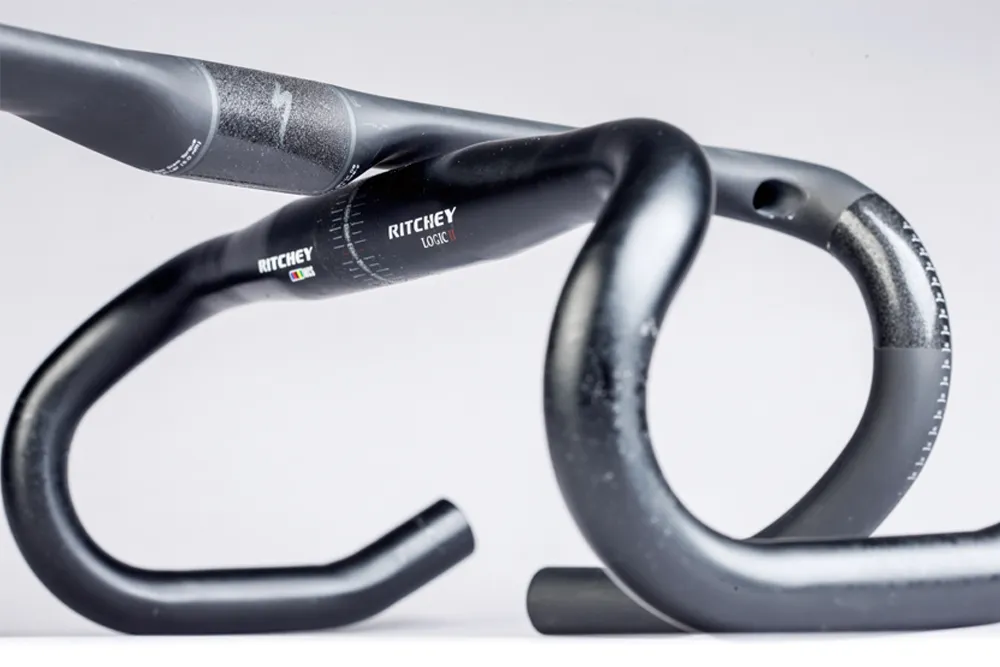
Stem: While frames built from 'the ground up' to suit women often have a shorter reach, those providing a unisex frame will nearly always fit a shorter stem. This does the same job of decreasing the reach, but can affect the handling.
Cranks: Women are typically shorter than men, so usually have shorter legs. Crank length is a debate on its own - but as a rule, reducing the length of the crank allows smaller riders to get the most from each pedal stroke. In the case of a very small frame, the cranks also need to be reduced in size to prevent toe overlap with the front wheel.
Gearing: If we're comparing Joe Bloggs and Lizzie Deignan, it's not realistic to say that the female rider will produce less power. But if we're comparing Joe Bloggs and Joanna Bloggs, it's an understandable assumption. It's therefore hightly likely to find the best women's road bikes featuring a compact or semi compact chainset (50/34 or 52/36 respectively) and wide ratio cassette (11-28 or 11-32).

Gearing may be adjusted on women's road bikes
Standover height: Some women's bikes have a sloping top tube, to reduce standover height. This applies more to hybrid bikes and mountain bikes.
Sizes: A unisex frame with female components marketed as the women's version will usually be available in smaller sizes. In an ideal world, the brand will scale down other elements of the geometry and aspects such as fork angle will change too.
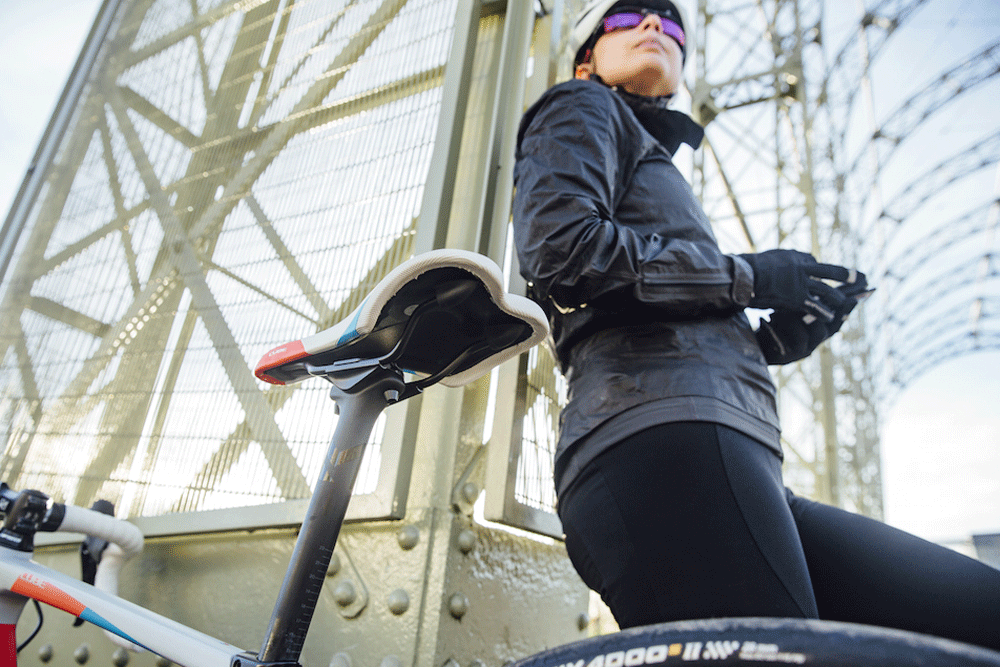
Saddle: Women frequently report saddle discomfort putting them off cycling. Most riders will swap the saddle on their bike early on - but a women's model will come with a women's saddle, giving a slightly higher chance of getting on with the perch after just a few rides.
Brands offering unisex frames with non-adjusted components
Many women choose to buy a standard unisex frame, and adjust the components above to suit. Indeed, many men will adjust these on unisex bikes in time.
If you're at a stage in your riding career where you know you'll do this anyway, then it doesn't make much difference.
However, picking a great women's road bike with these components already tweaked can make the first few months of bike ownership much cheaper - especially for beginners who don't have the standard cyclist's garage full of spare stems, handlebars and saddles.
Is the saddle most important for women's bikes?
Mike Smith is one of Britain’s top Retül bike fitters and runs Velomotion in Milton Keynes. He believes that the major difference in men's and women's bike fit lies in saddle comfort.
He commented: “I think it all comes around the saddle which makes the real difference to a female rider. Women are a lot more sensitive to putting weight through their perineum, soft tissue and their pubic bone.
“They prefer to sit to the back of the saddle where they put more weight through their sit bones.”
This sensitivity can be relieved by using a saddle with a cut-out, though thought should still be given to saddle width. “Spacing between the sit bones means the average woman would favour a wider saddle compared to a male rider,” Smith added.
Failure to address the saddle issue will see the rider sitting way back on her saddle, bending at the waist, not the hips, to give an upright position that makes the bike feel longer than it really is. This is a problem manufacturers mitigate with the aforementioned different tube lengths.

The saddle on a women's road bike
What type of women's road bike should you look for?
Before you enter a bike shop, get a clear idea of what you want your perfect women's road bike for. If you want the speed and aerodynamic benefits of a drop bar bike, then you're in the road bike camp - and the next step is to decide if you want an endurance focused on more aggressive race orientated frame.
Key road bike categories include:
Endurance focused women's road bikes
Endurance women's road bikes will generally feature a shorter reach, and a taller stack - putting the rider in a more upright position. Disc brakes are more popular in this category, along with a longer wheelbase to aid stability and the material will be fine tuned to offer greater compliance - or comfort. The Trek Domane is an example of an endurance road bike.
Race focused women's road bikes
Race bikes are created to offer nippy handling and a lower, more aero position - usually with a longer reach, lower stack and short wheelbase. The fork angles will be tuned for quick and responsive handling. Some of the best women's road bikes in this style will have disc brakes, which in our opinion are fantastic when hydraulic, and less so when mechanical (cable- actuated), so don't be immediately put off rim / caliper brakes for the sake of any disc options.
Best women's gravel bikes
If you are sold on the idea of owning a bike that fits your gender best, but want to hit the rough stuff, you might find that our guide on best women's gravel bikes a great help.
There's a lot of variation between cyclocross, adventure road and gravel bikes. They're all designed for riding on and off road - just to different degrees. gravel bikes bikes are one of the most versatile, suited to both road and trails, with higher bottom brackets to help you avoid roots and rocks, with more space for tyre clearance. Adventure road are similar, but closer to an endurance road bike, while a cyclocross bike will be designed purely for being nimble on rough terrain.
Best women's hybrid bikes
If you are looking for the best wheels for both rough and smooth, then our page on the best women's hybrid bikes is the one for you.
For city slickers who want flat bars and the option of hopping onto rough park tracks and canal paths, then a wider tyre hybrid with disc brakes like the Trek FX Disc Women's or Carrera Subway could be the thing. These will have flat handlebars, and offer a great deal of stability, though handling won't be quite as nippy as a road bike.
Electric women's road bikes
You might find that added vavavoom from one of the best women's electric bikes is what you've been missing on your rides.
If you would benefit from an extra boost up the difficult climbs or so you don't get so sweaty on your commute into the city, there are electric versions of road bikes. These will vary from ones with a hub-based or frame-mounted motor—and can offer different levels of assistance and range of battery life.
You don't have to use the electric assistance on these bikes at all times but it is always there for when you want it. But bear in mind, the e-bikes with the more powerful motors (and best assistance) are often heavier which can make cycling harder than usual when switched off. Therefore, keeping an eye on your battery levels and choosing a bike which has a big enough battery capacity for your riding is essential.
Women's road bike size chart
Road bikes are generally sold in sizes along the lines of 48cm, 50cm, 52cm and so on - though some brands choose instead to go for 'Small', 'Medium' and 'Large'.
There's no real standardisation in road bike sizing - which means one road bike brand's 48cm might suit a rider on a 50cm frame from one of their competitors. Not only that, but the same brand might call a unisex frame a 50cm, whilst the same rider might fit a 52cm frame in their women's range. Confusing, right?
The first option for many is to start by using the brand's designated sizing chart, dictating the ideal height range for each frame size.

This table is a quick reference women's bike size chart depending on height of rider. A bike shouldn't be purchased on this information alone.
Above is an example of a what sized women's bike you would need depending on your height. However, this is just to give you a rough idea of where to start your search.
Ideally you need a test ride before making any decisions. A rider with a shorter torso will generally go for a smaller frame than a rider with a long torso, even if they're the same height, as most of their length is in the leg (saddle height is much more adjustable than reach). Getting the right size is down to personal preference rather than black-and-white measurements.
We've got lots of hints and tips on how to find exactly the right sized women's bike for you on our road bike size guide , which can actually be applied to all styles of bikes.
Tips for choosing an ideal women's road bike for you
Once you know what sort of bike you're after, shop around online, and produce a list of bikes you're interested in. Most brands frame families will come available in a range of models, with different levels of specification.
More expensive groupsets will be lighter and longer lasting - and it is generally considered that it is better to spend at the top end of your budget to avoid further expenditure through upgrades.
With a few choice models selected, ask for test rides, using the experience to help you decide what you like. Remember when testing unisex bikes that wider handlebars and a less-than-perfect saddle might be altering the ride quality.